American universities in Europe are US-chartered, US-accredited institutions operating full degree-granting campuses across the continent. They award American degrees, follow the American academic model, and in many cases accept US federal financial aid. The category spans cities from Paris and Rome to Berlin and Budapest.
This article covers what defines the category of American colleges in Europe, which institutions currently meet the standard, and what families need to confirm before committing.
American Universities in Europe at a Glance
|
University |
Posizione |
US Accreditation |
Tuition |
FAFSA Eligible |
Il migliore per |
|
American University of Paris |
Paris, France |
MSCHE |
~€38,250 ($40,000) / year |
Yes |
International affairs and communications in a cosmopolitan setting |
|
Università John Cabot |
Rome, Italy |
MSCHE |
~€13,332 ($29,000) / year |
Yes |
Art history, classics, and international business immersed in Roman history |
|
Franklin University Switzerland |
Lugano, Switzerland |
MSCHE + Swiss accreditation |
CHF 52,750 (~$59,000) / year |
Yes |
Personalized, globally focused liberal arts education with mandatory academic travel |
|
Richmond American University London |
London, United Kingdom |
MSCHE + UK accreditation |
~£17,500 ($22,000) / year |
Yes |
Dual US and UK degrees paired with London’s career opportunities |
|
Bard College Berlin |
Berlin, Germany |
MSCHE via Bard College |
€27,500 (~$30,000) off campus; €38,250 on campus / year |
Yes |
Civic engagement, humanities, and the arts in one of Europe’s most creative cities |
|
Saint Louis University Madrid |
Madrid, Spain |
HLC via Saint Louis University |
~€27,600 / year |
Yes |
Strong STEM and health science programs |
|
Webster University Vienna |
Vienna, Austria |
MSCHE via Webster University |
~€23,800 ($25,300) / year |
Yes |
Business, international relations, and psychology in a diplomatic hub |
|
American College of Greece (Deree) |
Athens, Greece |
NECHE |
~$13,200 / year (30 credits) |
Yes |
A large campus community and affordable tuition in the birthplace of Western civilization |
|
McDaniel College Budapest |
Budapest, Hungary |
MSCHE via McDaniel College |
€9,200 (~$10,000) / year |
Yes |
An affordable, classic US liberal arts education in Eastern Europe |
|
American University of Rome |
Rome, Italy |
MSCHE |
€22,000 / year |
Yes |
Archaeology, classics, and film studies with fieldwork embedded in the curriculum |
What Qualifies as an American University in Europe
An American university in Europe is a US-chartered institution, incorporated under US law, accredited by a recognized US regional body, and operating a full degree-granting campus on European soil. The degree it awards is an American degree. The academic structure it follows is the American model.
This distinction matters because families searching for a college in Europe for American students will encounter both categories. One is the category this article covers: universities chartered and accredited in the United States that happen to operate in Europe. The other is European universities that teach in English, admit American applicants, or both. The two categories differ in accreditation, degree structure, financial aid eligibility, and how the credential is recognized once a student returns to the United States.
An American university in Europe follows the four-year bachelor’s degree model, with a liberal arts core, general education requirements, and elective coursework before declaring a major in the second year. Assessment runs on a cumulative grade point average. A European university typically awards a three-year bachelor’s, admits students directly into a specialized program from the first day, and assesses through terminal examinations. The structural differences between these two systems are covered in our article on American versus European education systems.
Three criteria determine whether an institution qualifies as an American university in Europe for the purposes of this article. The first is US regional accreditation from a recognized body such as MSCHE, NECHE, or HLC, which determines how the degree is treated by American employers and graduate schools. The second is a full four-year bachelor’s degree, which excludes semester-abroad programs and language immersion providers that use the word “American” in their names without granting a complete credential. The third is English-language instruction throughout the program. Every institution profiled below meets all three.
10 US-Accredited American Universities in Europe
The ten American colleges in Europe below represent a selection of institutions currently operating across the continent. This is not a complete directory, a ranking, or an endorsement of any institution over another. Tuition, enrollment, and financial aid figures reflect the most recent academic year based on each institution’s published data, and families should confirm current figures directly before applying.
1. The American University of Paris

Among American colleges in Europe, AUP’s curriculum concentrates on international affairs, global communications, and Middle East studies, drawing on the density of international organizations and diplomatic institutions in the surrounding city. Faculty bring professional backgrounds from these sectors into seminar-sized classes. The program structure follows a standard American liberal arts model with general education requirements and a declared major in the second year.
- Posizione: Paris, France
- US Accreditation: MSCHE
- Enrollment: ~1,280 students, 100+ nationalities, approximately 30% US citizens
- Tuition: ~€38,250 ($40,000) per year
- FAFSA Eligible: Yes
- Best for: International affairs and communications in a cosmopolitan setting
2. Università John Cabot

John Cabot has built particular academic depth in art history, classics, political science, and international business over several decades of operation. The academic calendar incorporates structured internship placement across Roman industries, and the university maintains institutional relationships with organizations across the city. As one of the most established liberal arts universities in Europe, it also offers Italian language study as an elective alongside the English-language degree program.
- Posizione: Rome, Italy
- US Accreditation: MSCHE
- Enrollment: 1,500+ students, 70+ countries
- Tuition: ~€13,332 ($29,000) per year
- FAFSA Eligible: Yes
- Best for: Art history, classics, and international business immersed in Roman history
3. Franklin University Switzerland
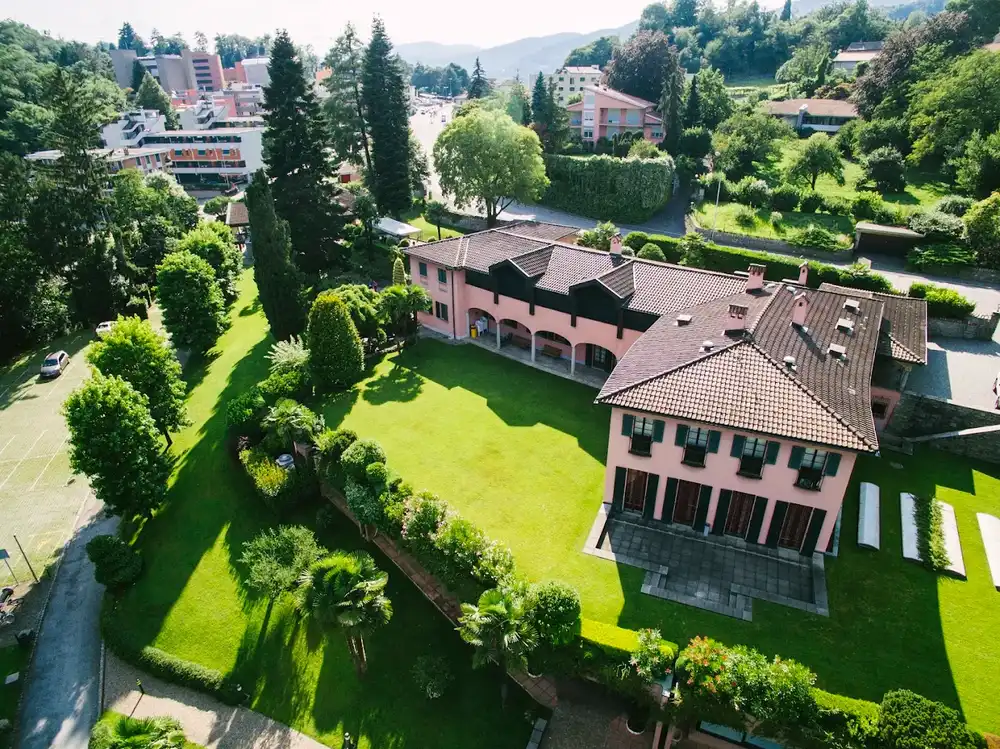
Franklin builds academic travel into the degree as a curricular requirement, with coursework structured around direct engagement with the regions under study. Programs in international relations, environmental studies, and visual communication arts anchor the curriculum. The dual accreditation means graduates hold a credential formally recognized in both the US and Swiss systems. It remains one of the few English-speaking universities in Switzerland to offer a fully US-accredited liberal arts degree.
- Posizione: Lugano, Switzerland
- US Accreditation: MSCHE, with dual Swiss accreditation
- Enrollment: ~400 students, 50+ nationalities, approximately 50 to 60% US citizens
- Tuition: CHF 52,750 (~$59,000) per year
- FAFSA Eligible: Yes
- Best for: Personalized, globally focused liberal arts education with mandatory academic travel
4. Richmond American University London
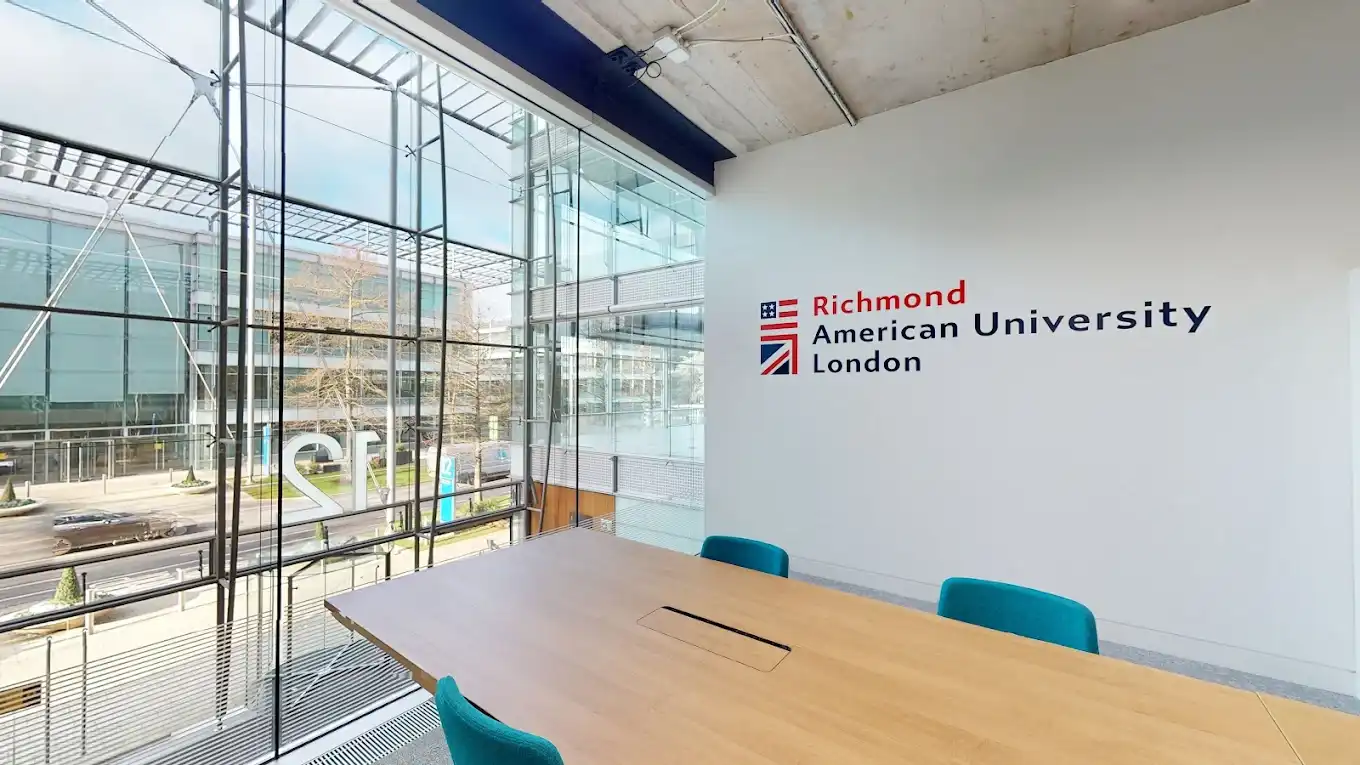
Richmond is among the most distinctive colleges in Europe for American students, offering a dual-accredited degree with formal recognition in both the US and UK academic systems through a single program. Business, international relations, and fashion management are among the established undergraduate tracks. Several degree paths incorporate integrated internship placements running through London’s financial and professional sectors.
- Posizione: London, United Kingdom
- US Accreditation: MSCHE, with dual UK accreditation
- Enrollment: ~1,000 students, 100+ nationalities
- Tuition: ~£17,500 ($22,000) per year
- FAFSA Eligible: Yes
- Best for: Dual US and UK degrees paired with London’s career opportunities
5. Bard College Berlin
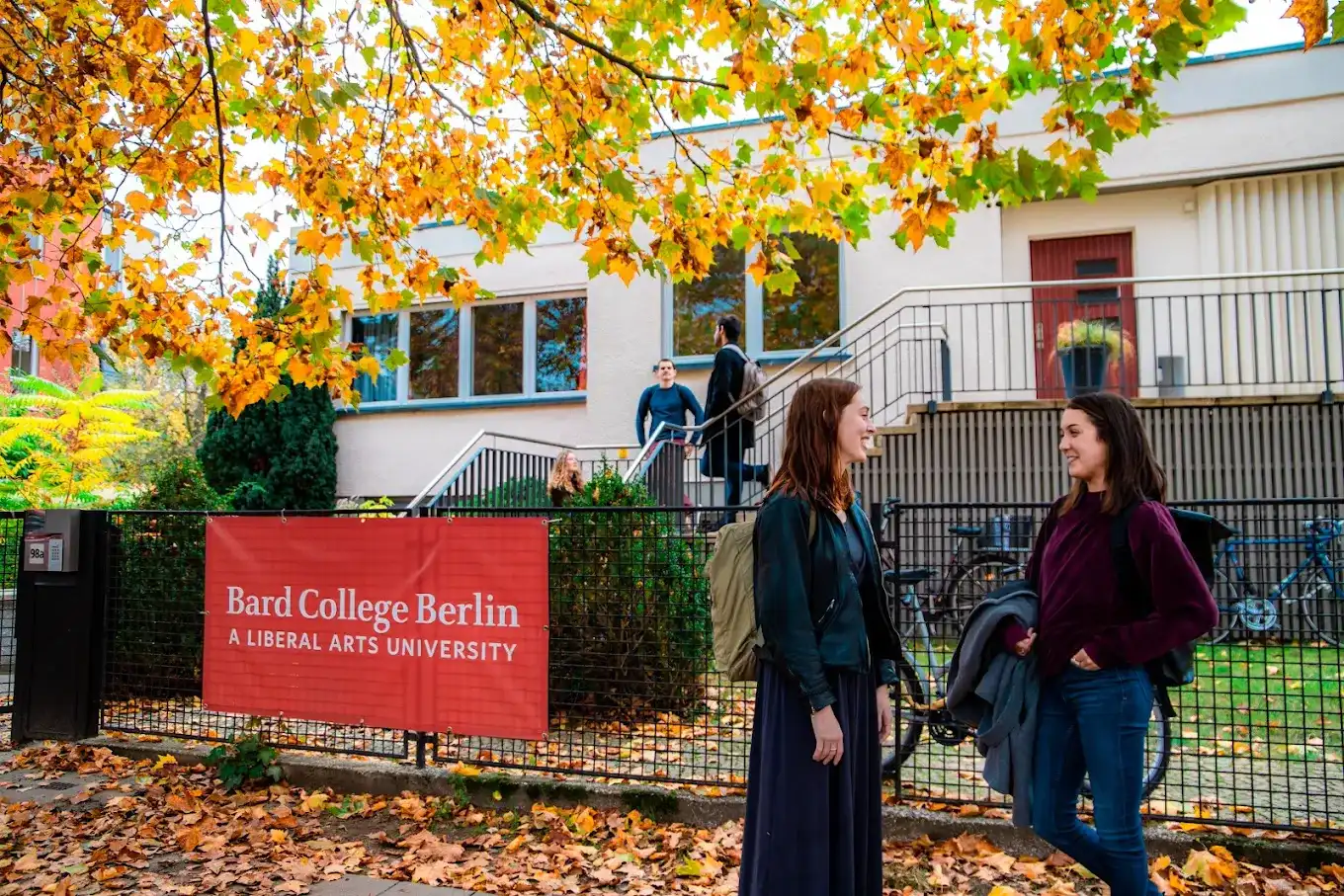
Bard Berlin runs a seminar-driven curriculum grounded in a shared core sequence covering intellectual and cultural history, after which students specialize in literature, politics, economics, or the arts. Class sessions are structured as guided discussion, and the program follows the pedagogical model of the parent campus at Bard College in Annandale-on-Hudson. It stands among a small number of fully US-accredited English-speaking universities in Germany offering a complete four-year degree.
- Posizione: Berlin, Germany
- US Accreditation: MSCHE, via Bard College, Annandale
- Enrollment: ~300 students, 60+ nationalities
- Tuition: €27,500 (~$30,000) off campus, €38,250 comprehensive fee on campus (2026 to 2027)
- FAFSA Eligible: Yes
- Best for: Civic engagement, humanities, and the arts in one of Europe’s most creative cities
6. Saint Louis University Madrid
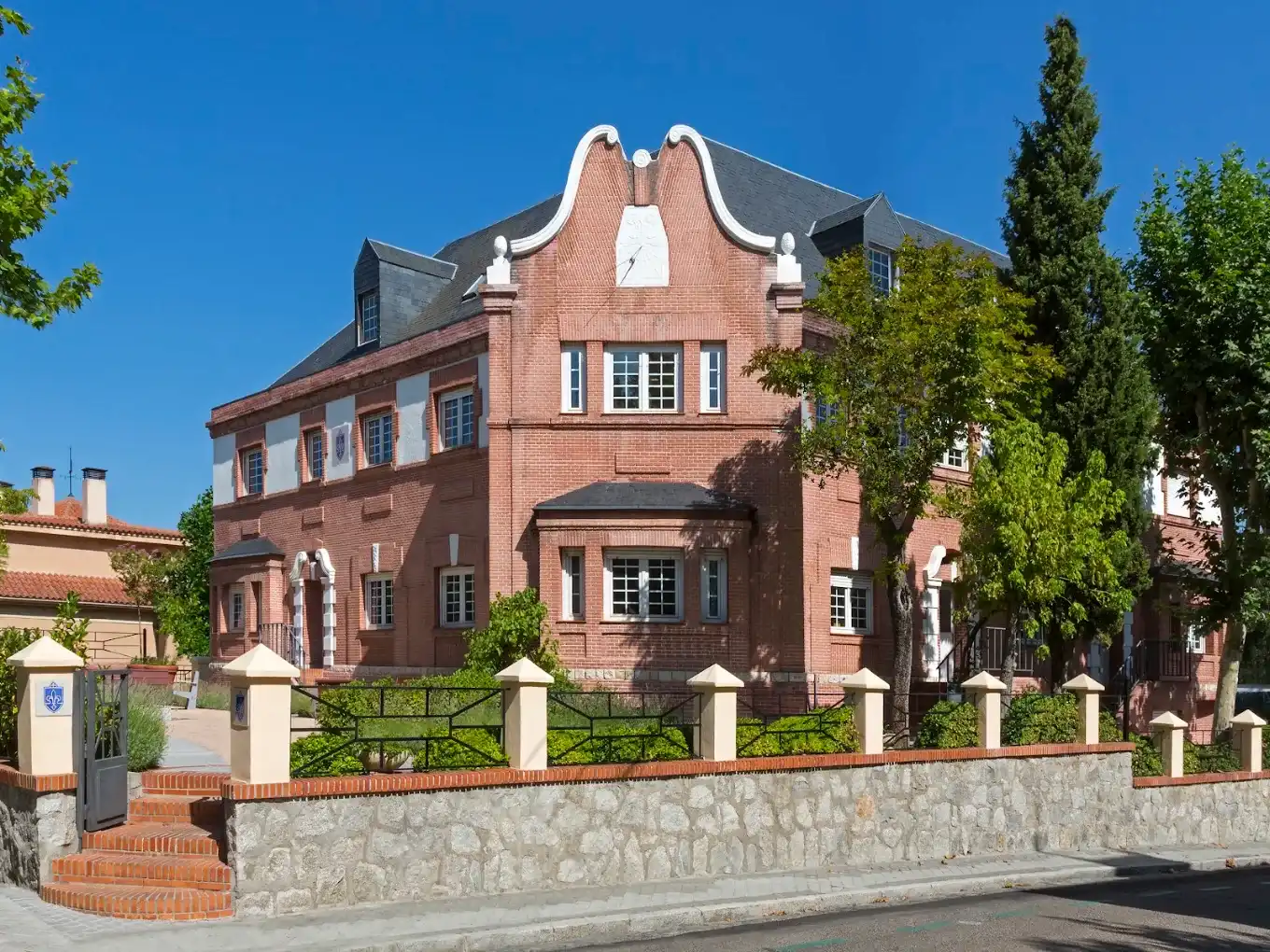
SLU Madrid offers 23 undergraduate majors completable entirely in Spain, including programs across health sciences, engineering, computer science, and international business. The campus follows the Jesuit educational tradition and carries identical degree requirements to the main university. Students can transition between the Madrid and Missouri campuses in either direction without disrupting their degree progress.
- Posizione: Madrid, Spain
- US Accreditation: HLC, via Saint Louis University main campus
- Enrollment: ~1,000 students, 65+ countries, roughly half visiting or degree-seeking US students
- Tuition: ~€27,600 per year
- FAFSA Eligible: Yes
- Best for: Strong STEM and health science programs
7. Webster University Vienna

Webster Vienna operates within a multi-campus network that allows students to move between European locations and the main campus in St. Louis within a single degree program. The university’s academic strengths concentrate in international relations, business, and psychology. Vienna’s concentration of diplomatic institutions and international organizations provides a professional context that shapes coursework and internship access across these programs.
- Posizione: Vienna, Austria
- US Accreditation: MSCHE, via Webster University, St. Louis
- Enrollment: ~500 students, 70+ nationalities
- Tuition: ~€23,800 ($25,300) per year
- FAFSA Eligible: Yes
- Best for: Business, international relations, and psychology in a diplomatic hub
8. American College of Greece (Deree)

ACG stands among the largest European colleges for American students, with an undergraduate population supporting a program range uncommon at this scale, spanning business, computer science, communications, and the humanities. Tuition sits well below the average for American universities in Europe, and the institution has operated continuously in Athens since 1875, making it one of the longest-running American educational institutions outside the United States. The college runs its own career services and internship network across Greek and international employers.
- Posizione: Athens, Greece
- US Accreditation: NECHE
- Enrollment: 4,000+ students, 70+ nationalities
- Tuition: ~$13,200 per year (30 credits)
- FAFSA Eligible: Yes
- Best for: A large campus community and affordable tuition in the birthplace of Western civilization
9. McDaniel College Budapest
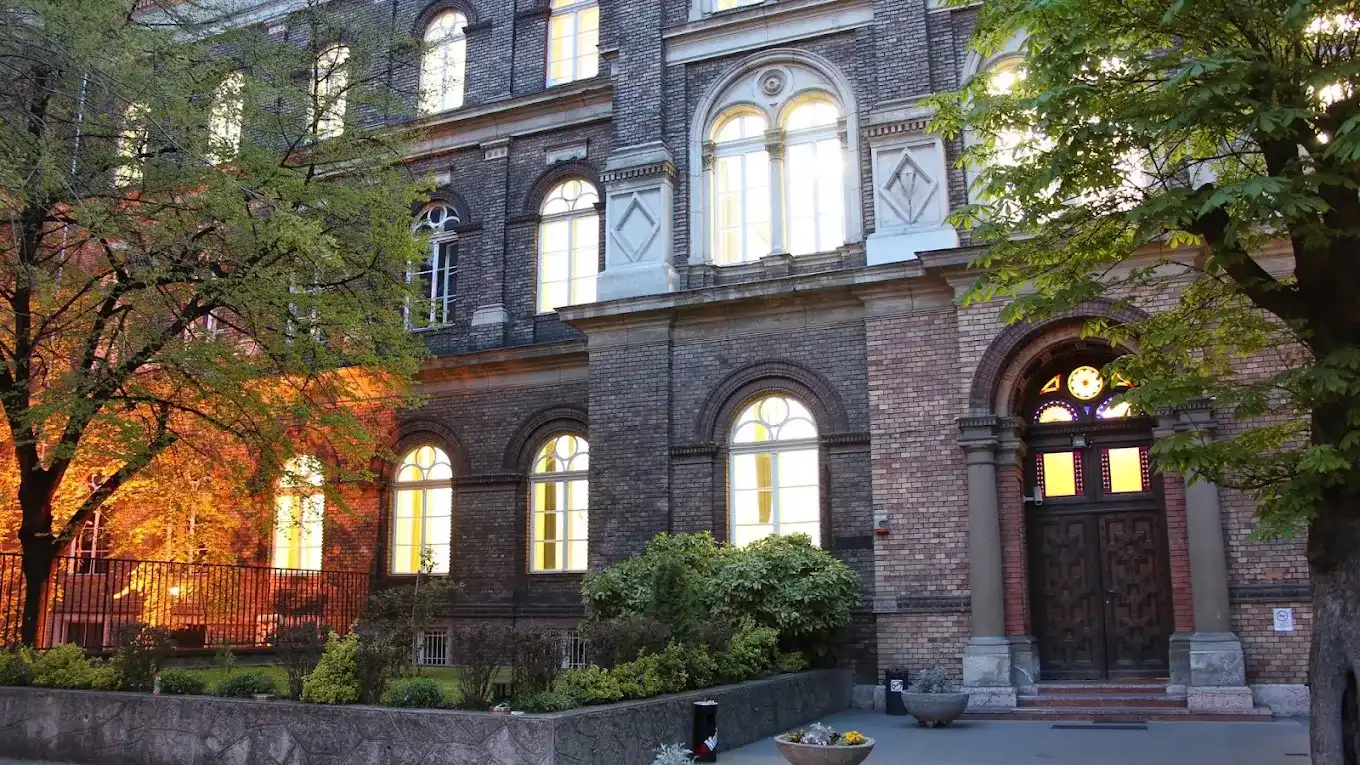
McDaniel Budapest follows the same liberal arts core and degree requirements as the main campus in Westminster, Maryland, and coursework transfers seamlessly between the two locations. The tuition structure makes it one of the most accessible entry points into a US-accredited degree in Europe. The program draws students from across Eastern Europe, the US, and Asia into a small cohort that maintains close faculty contact throughout the four years.
- Posizione: Budapest, Hungary
- US Accreditation: MSCHE, via McDaniel College main campus
- Enrollment: ~100 to 200 students
- Tuition: €9,200 (~$10,000) per year
- FAFSA Eligible: Yes
- Best for: An affordable, classic US liberal arts education in Eastern Europe
10. American University of Rome
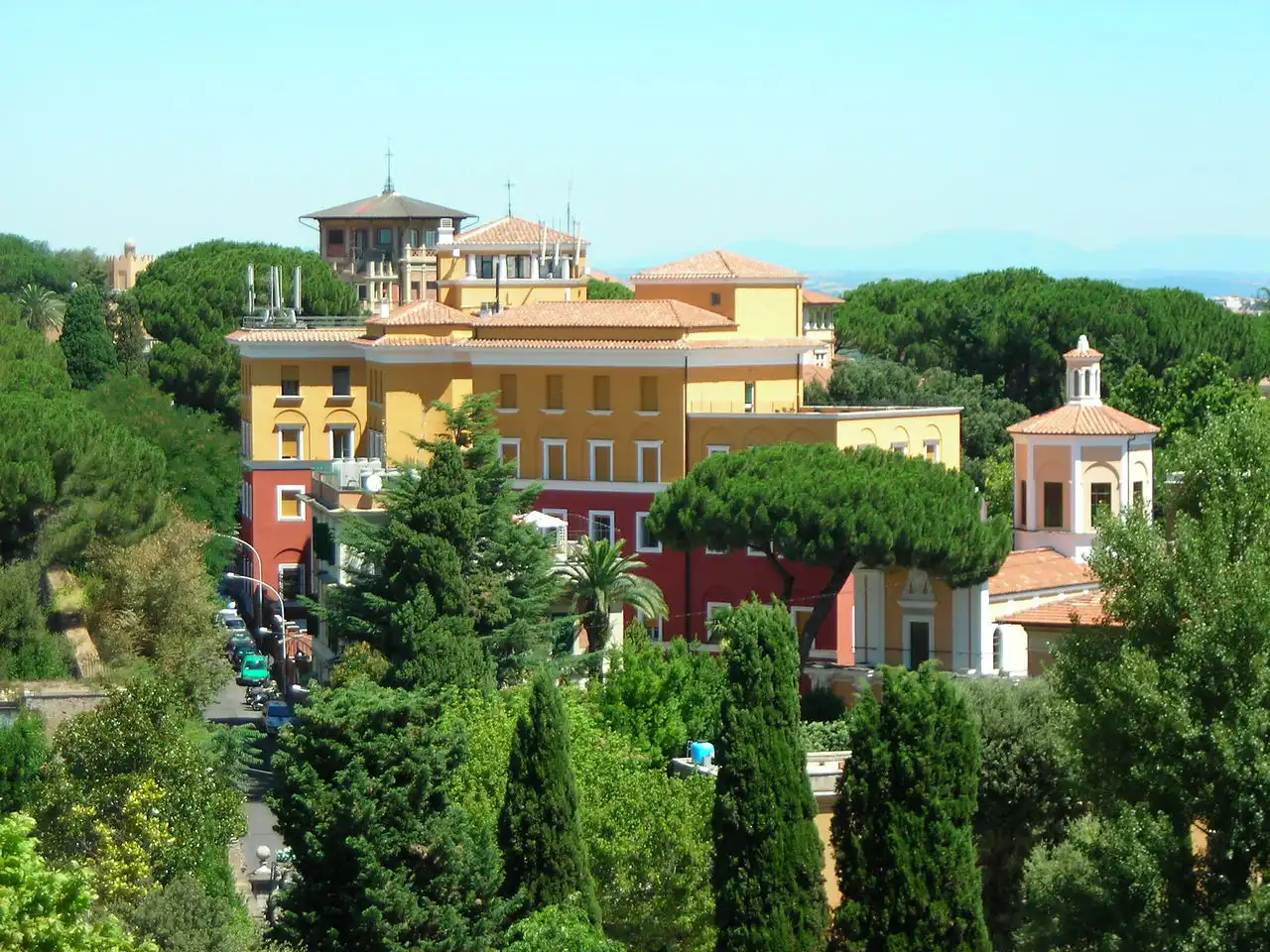
AUR’s academic identity centers on archaeology, classics, and film studies, with fieldwork and site-based coursework woven into the curriculum across these programs. Faculty maintain active research profiles in their disciplines, and the surrounding city functions as a primary teaching resource for applied coursework. The institution also holds the distinction of being one of the few American universities in Europe to offer a dedicated fine arts program alongside its humanities curriculum.
- Posizione: Rome, Italy
- US Accreditation: MSCHE
- Enrollment: ~500 students, 60 nationalities, approximately one-third degree-seeking US students
- Tuition: €22,000 per year
- FAFSA Eligible: Yes
- Best for: Archaeology, classics, and film studies with fieldwork embedded in the curriculum
Accreditation, Financial Aid, and Credit Transfer at American Colleges in Europe
Three practical questions come up consistently when families evaluate American colleges in Europe: whether the degree carries the same weight as a domestic one, whether federal financial aid applies, and whether credits transfer if a student’s plans change.
1. US Regional Accreditation Explained
A degree from a regionally accredited American university in Europe is treated by US employers and graduate schools identically to a degree earned on domestic soil. No credential evaluation is required.
The US Department of Education removed the official distinction between regional and national accreditors in 2020, reclassifying both as institutional accreditors, and a February 2026 proposed interpretive rule goes further by proposing to eliminate the term “regional” from accreditor terminology entirely.
The higher education community continues to use the term to refer to the historic seven bodies, including MSCHE, NECHE, and HLC, which remain the recognized standard for academic rigor and credit transferability. Families should verify that a specific institution appears on its accrediting body’s active directory before enrolling, since accreditation status can lapse or come under review.
2. Federal Financial Aid Eligibility
US accreditation and federal financial aid eligibility are separate designations. Federal aid at Title IV-participating foreign institutions is restricted to loans, specifically Direct Subsidized and Unsubsidized Loans and Parent PLUS Loans. Federal Pell Grants cannot be used to earn a degree at a foreign institution, even one that is US-accredited and Title IV participating.
An institution can also hold a Federal School Code for limited purposes, such as 529 plan disbursements or veterans’ benefits, without accepting federal loans. Families can confirm Title IV participation through the Federal Student Aid search tool at studentaid.gov before submitting applications.
3. Credit Transfer Back to US Institutions
Credits earned at a regionally accredited American university in Europe transfer to US institutions on the same basis as credits from any domestic college. Because these institutions issue transcripts in US credit hours rather than ECTS, no conversion or evaluation through a credential agency is required. The receiving institution still determines what counts toward its own degree requirements, as it would with any transfer student, but the credits themselves carry equivalent standing.
European university credits are a different matter, requiring foreign degree equivalency evaluation through a NACES-member agency such as World Education Services before a US institution will assess them.
Students who want to preserve the option of transferring between institutions or continuing to a US graduate program benefit from starting at a US-accredited institution, where academic standing carries over intact.
How to Apply to American Universities in Europe
Most American universities in Europe accept applications through their own institutional portals rather than centralized systems like UCAS or Studielink, and requirements tend to be lighter than those at domestic US universities. Before applying, work through the following:
- Confirm each institution’s accreditation status and FAFSA eligibility before adding it to your list
- Check application deadlines. Rolling admissions is common, but some institutions set fixed priority dates for autumn intake and scholarships
- Prepare a high school transcript, one or two letters of recommendation, and a personal statement. Standardized testing requirements vary by institution
- Confirm English proficiency requirements. Most institutions waive these for native speakers
- Apply for a student visa or residence permit for any program longer than 90 days. Requirements differ by country, so consult the relevant consulate well ahead of your intended start date
- Verify whether the degree structure supports transfer to a US campus if your plans change mid-degree
Planning Your Next Step
Choosing among American universities in Europe involves more than comparing programs and tuition. Accreditation status, financial aid eligibility, credit transferability, and degree recognition all carry long-term consequences that families should evaluate before committing. Working with an educational consultant who understands both American and European institutions can bring structure and institutional perspective to a process with this many variables.
Schedule a consultation with McMillan Education International to start the conversation.
Domande frequenti
1. Can a US student go to college in Europe?
Yes. American students have two main routes: enrolling at an American university in Europe, which awards a US-accredited degree, or enrolling directly at a European university, which awards a European qualification. This article covers the first. Both routes are open to US students and carry different implications for cost, degree structure, and recognition upon return.
2. What is the difference between an American university in Europe and a European university?
An American university in Europe is US-chartered and US-accredited, awards a four-year degree, and follows the American academic model including a liberal arts core, GPA-based assessment, and a declared major. A European university typically awards a three-year degree, admits students directly into a specialized program from the first day, and assesses through terminal examinations rather than continuous coursework.
3. Are degrees from American universities in Europe recognized in the US?
Yes, provided the institution holds accreditation from a recognized US body. A degree from a regionally accredited American university in Europe is treated by US employers and graduate schools the same way a domestic US degree would be, with no additional credential evaluation required.
4. Can I use FAFSA at American universities in Europe?
At institutions that participate in the US Department of Education’s Title IV program, yes. Federal aid at eligible foreign institutions is restricted to loans, specifically Direct Subsidized and Unsubsidized Loans and Parent PLUS Loans. Pell Grants cannot be used to earn a degree at a foreign institution, even a US-accredited one. Families can confirm Title IV participation through the Federal Student Aid search tool at studentaid.gov before applying.
5. Can I transfer credits from an American university in Europe to a US college?
Yes. Credits from a regionally accredited American university in Europe transfer to US institutions on the same basis as credits from any domestic college. Because these institutions issue transcripts in US credit hours, no NACES evaluation is required. The receiving institution still determines what counts toward its own degree requirements, but the credits themselves carry equivalent standing.
6. Is college free in Europe for US citizens?
Not at American universities in Europe, which charge tuition comparable to smaller US private colleges. Some European public universities in countries such as Germany and Norway charge little or no tuition for all students, including Americans, but those institutions award European qualifications under a different academic structure.
7. Is it cheaper for Americans to go to college in Europe?
It depends on the institution and country. American universities in Europe vary considerably in cost, from around $10,000 per year at McDaniel College Budapest to $59,000 at Franklin University Switzerland. Several fall below the average tuition of comparable US private colleges. European universities tend to charge lower tuition and in some countries charge none at all, though they operate under a different degree system.