

Europe’s engineering schools have a long academic tradition, with some institutions dating back centuries and many tracing their formal engineering programs to the 19th-century polytechnic movement. Not all of them, however, offer engineering bachelor’s degrees taught entirely in English. This article covers some of the top engineering schools in Europe that do, with detailed information on each institution and their English-taught engineering programs.
Quick Look: 15 English-Taught Engineering Universities in Europe
| University | Country | QS Rank | EU/EEA Tuition | Non-EU Tuition | English-Taught Programs |
|---|---|---|---|---|---|
| TU Delft | 🇳🇱 Netherlands | #13 | €2,601/yr | €17,310/yr | BSc Aerospace Engineering BSc Computer Science and Engineering |
| Technical University of Munich (TUM) | 🇩🇪 Germany | #16 | ~€170/yr | €4,000–€6,000/yr | BSc Aerospace BSc Information Engineering |
| Politecnico di Milano | 🇮🇹 Italy | #20 | €156–€3,900/yr | ~€3,900/yr | BSc Civil Engineering BSc Process Engineering (Sept 2026) BSc Industrial Engineering (Sept 2026) |
| KTH Royal Institute of Technology | 🇸🇪 Sweden | #33 | Free | ~€11,000/yr | BSc Information and Communication Technology |
| KIT, Karlsruhe Institute of Technology | 🇩🇪 Germany | #42 | €17,360/yr | €17,360/yr | BSc Mechanical Engineering |
| Politecnico di Torino | 🇮🇹 Italy | #53 | €156–€3,200/yr | ~€1,000–€3,200/yr | BSc Automotive Engineering BSc Computer Engineering BSc Electronic and Communications Engineering BSc Civil and Environmental Engineering |
| Technical University of Denmark (DTU) | 🇩🇰 Denmark | #56 | Free | ~€15,000/yr | BSc General Engineering (Cyber Systems, Future Energy, Living Systems) |
| KU Leuven | 🇧🇪 Belgium | #60 | ~€1,116/yr | ~€7,300/yr | BSc Engineering Technology (Chemical, Electromechanical, or Electronics & ICT) |
| Eindhoven University of Technology (TU/e) | 🇳🇱 Netherlands | #91 | €2,601/yr | ~€13,800/yr | BSc Mechanical Engineering BSc Automotive Technology BSc Computer Science and Engineering BSc Electrical Engineering BSc Chemical Engineering and Chemistry BSc Biomedical Engineering BSc Sustainable Innovation BSc Built Environment |
| Sapienza University of Rome | 🇮🇹 Italy | #99 | €156–€3,000/yr | ~€1,000–€1,200/yr | BSc Applied Computer Science and Artificial Intelligence BSc Sustainable Building Engineering |
| Trinity College Dublin | 🇮🇪 Ireland | #149 | ~€3,000/yr | ~€27,000/yr | BSc Engineering (Civil, Structural, Environmental, Mechanical, Electronic, or Computer) BSc Engineering with Management |
| Università di Padova | 🇮🇹 Italy | #155 | €156–€3,000/yr | ~€3,000/yr | BSc Information Engineering |
| University College Dublin (UCD) | 🇮🇪 Ireland | #191 | ~€3,000/yr | ~€29,000/yr | BSc Engineering Science (Biomedical, Chemical, Civil, Electrical, or Mechanical) |
| Aalto University | 🇫🇮 Finland | #194 | Free | €12,000/yr | BSc Science and Technology (Chemical Engineering, Computational Engineering, Digital Systems and Design) |
| Czech Technical University in Prague | 🇨🇿 Czech Republic | #198 | ~€4,500/yr | ~€4,500/yr | BSc Mechanical Engineering BSc Information Technology BSc Electrical Engineering and Computer Science BSc Civil Engineering |
How Engineering Universities in Europe Differ From the US and UK
Engineering degrees in Europe are structured differently from what students familiar with US and UK education systems might expect. In the United States, a bachelor’s in engineering takes four years and includes general education courses alongside the technical curriculum; students often do not formally commit to their specific engineering discipline until the end of the first or second year. In the UK, the standard engineering route at most research universities is the four-year integrated MEng, which combines undergraduate and postgraduate study into a single qualification.
European engineering programs, shaped by the Bologna framework, typically run three to four years with technical coursework starting from day one and no general education requirement.
15 Engineering Universities in Europe with Fully English Undergraduate Programs
Because European engineering programs differ structurally from UK engineering degrees, as outlined above, this list focuses exclusively on non-UK European institutions. The universities below were selected on two criteria:
- All confirmed programs are taught entirely in English
- All institutions appear within the top 200 of the QS World University Rankings by Subject for Engineering and Technology 2026.
As part of our work guiding international students toward universities worldwide, this article aims to introduce students to well-regarded programs that may be new to them. This is neither a ranking nor an endorsement of one institution over another – there are other top engineering schools in Europe beyond what is covered here.
1. Delft University of Technology | Netherlands

Founded in 1842, TU Delft is the oldest and largest technical university in the Netherlands and one of the most research-intensive engineering schools in continental Europe. Its faculties span eight engineering disciplines, and nearly 30% of the student body is international.
- QS Engineering & Technology Ranking: #13
- Tuition Fee (EU/EEA): €2,601/year
- Tuition Fee (Non-EU): €17,310/year
English Programs
- BSc Aerospace Engineering
- BSc Computer Science and Engineering
2. Technical University of Munich (TUM) | Germany
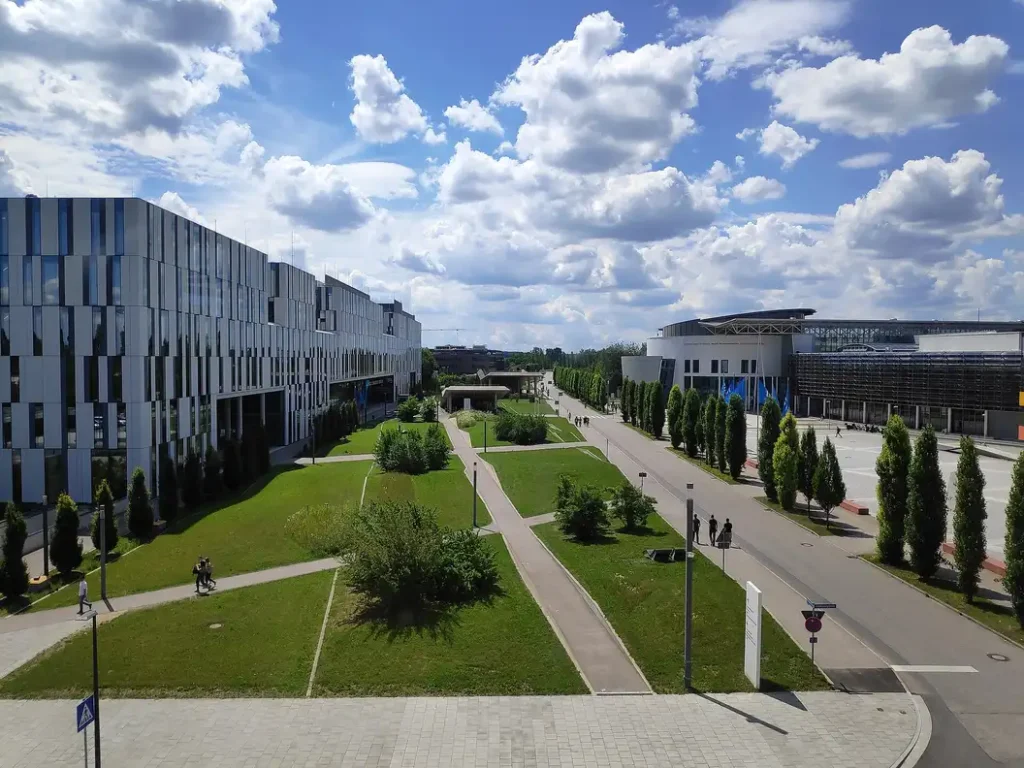
Germany’s highest-ranked engineering university and one of a small number of German universities that offer bachelor’s degrees taught entirely in English. It maintains a strong industry network across Bavaria and globally, making it a major hub for research and innovation. TUM’s English bachelor’s programs are concentrated at specific campuses and represent a deliberate expansion of international undergraduate access within a system that has historically required German proficiency at entry.
- QS Engineering & Technology Ranking: #16
- Tuition Fee (EU/EEA): ~€170/year (Administrative fees only)
- Tuition Fee (Non-EU): €4,000 – €6,000/year
English Programs
- BSc Aerospace
- BSc Information Engineering
3. Politecnico di Milano | Italy

As Italy’s largest and highest-ranked technical university, Politecnico di Milano is globally recognized for its excellence in engineering, architecture, and design. Its Milan location places students at the center of one of Europe’s most active industrial and design economies, with direct access to sectors spanning manufacturing, infrastructure, and advanced materials.
- QS Engineering & Technology Ranking: #20
- Tuition Fee (EU/EEA): €156 – €3,900/year (Scaled by family income)
- Tuition Fee (Non-EU): ~€3,900/year
English Programs
- BSc Civil Engineering
- BSc Process Engineering (Starting Sept 2026)
- BSc Industrial Engineering (Starting Sept 2026)
4. KTH Royal Institute of Technology | Sweden

Sweden’s largest technical university and a leading institution in Northern Europe for engineering, computer science, and sustainable technology. KTH’s research and industry partnerships extend across Scandinavia’s technology sector, with particular depth in telecommunications, energy systems, and transportation engineering. Like most Swedish technical universities, KTH teaches the majority of its undergraduate programs in Swedish – its English bachelor’s offering is a single flagship program designed specifically for international students entering the technology disciplines.
- QS Engineering & Technology Ranking: #33
- Tuition Fee (EU/EEA): Free
- Tuition Fee (Non-EU): ~€11,000/year (122,000 SEK)
English Programs
- BSc Information and Communication Technology (Note: This covers the exact curriculum of a Computer/Software Engineering degree)
5. KIT, Karlsruhe Institute of Technology | Germany
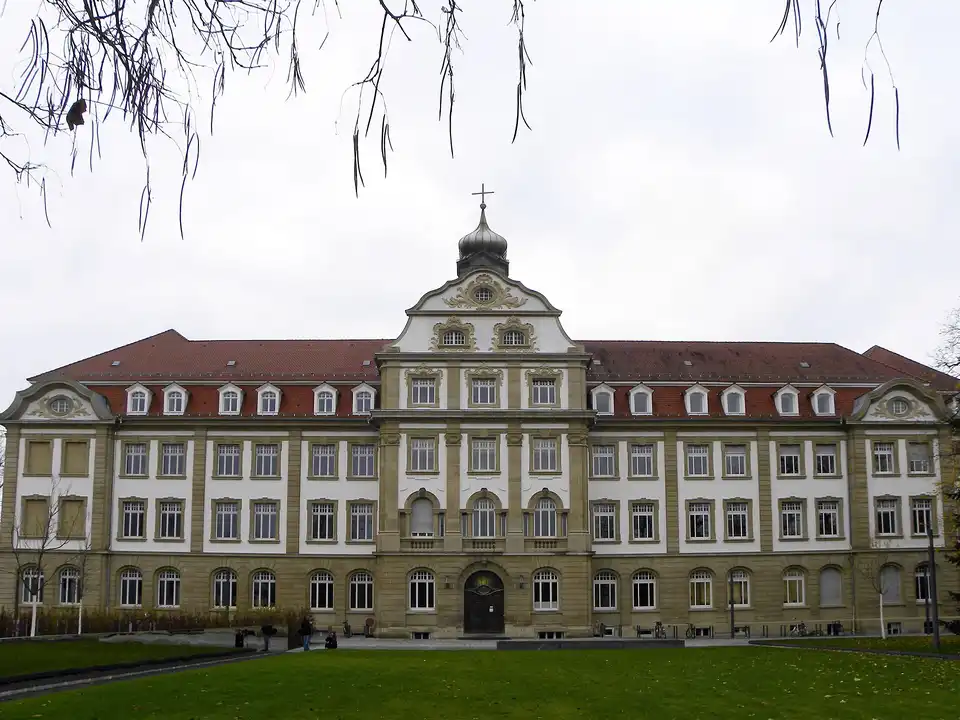
As a national research center of the Helmholtz Association, KIT is uniquely positioned among German universities for its massive research output and facility infrastructure. It is highly regarded globally for its engineering and natural sciences programs. Its English-taught undergraduate engineering is offered exclusively through the international, self-funded Carl Benz School.
- QS Engineering & Technology Ranking: #42
- Tuition Fee (EU/EEA): €17,360/year (via Carl Benz School)
- Tuition Fee (Non-EU): €17,360/year (via Carl Benz School)
English Programs
- BSc Mechanical Engineering
6. Politecnico di Torino | Italy
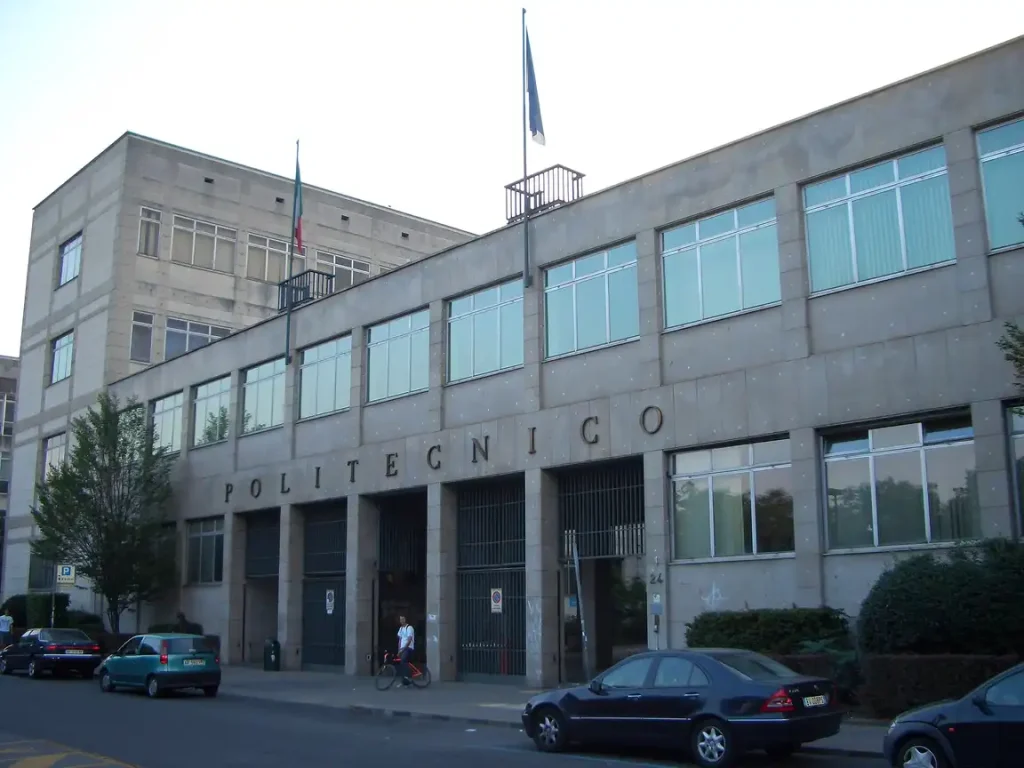
One of Italy’s two leading technical universities, Politecnico di Torino has sustained deep institutional ties to the country’s automotive and manufacturing industries since its founding in 1859. Over 16% of its student body is international. Among the institutions on this list, it offers one of the most extensive portfolios of English-taught engineering bachelor’s programs available at a single continental European university, covering automotive, computer, electronic, and civil engineering within a single undergraduate faculty.
- QS Engineering & Technology Ranking: #53
- Tuition Fee (EU/EEA): €156 – €3,200/year (Scaled by family income)
- Tuition Fee (Non-EU): ~€1,000 – €3,200/year
English Programs
- BSc Automotive Engineering
- BSc Computer Engineering
- BSc Electronic and Communications Engineering
- BSc Civil and Environmental Engineering
7. Technical University of Denmark (DTU) | Denmark
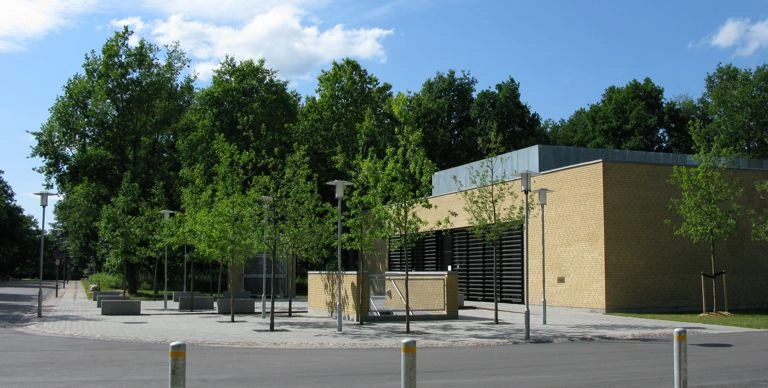
Situated near Copenhagen, DTU is among the most research-productive technical universities in Northern Europe, with particular institutional strength in energy systems, biotechnology, and sustainability engineering. Its undergraduate structure differs from most institutions on this list: the English bachelor’s program admits students into a broad general engineering track and allows specialization from the second year onward, rather than requiring discipline commitment at the point of application.
- QS Engineering & Technology Ranking: #56
- Tuition Fee (EU/EEA): Free
- Tuition Fee (Non-EU): ~€15,000/year
English Programs
- BSc General Engineering (Tracks in Cyber Systems, Future Energy, Living Systems)
8. KU Leuven | Belgium
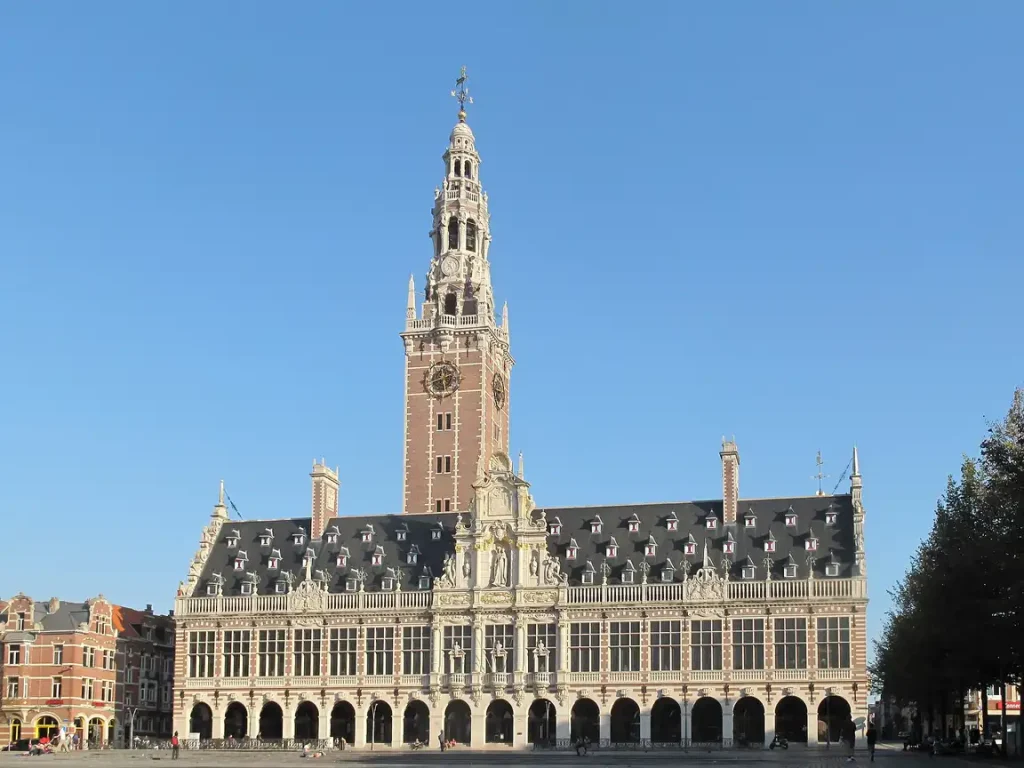
KU Leuven operates one of the continent’s largest research budgets relative to student enrollment. Its Faculty of Engineering Technology offers an English-taught bachelor’s with three distinct specialization tracks, providing a structured pathway for international students who have identified a broad engineering domain but wish to confirm their specific discipline focus during the first year of study.
- QS Engineering & Technology Ranking: #60
- Tuition Fee (EU/EEA): ~€1,116/year
- Tuition Fee (Non-EU): ~€7,300/year
English Programs
- BSc Engineering Technology (Specializations in Chemical, Electromechanical, or Electronics & ICT)
9. Eindhoven University of Technology (TU/e) | Netherlands
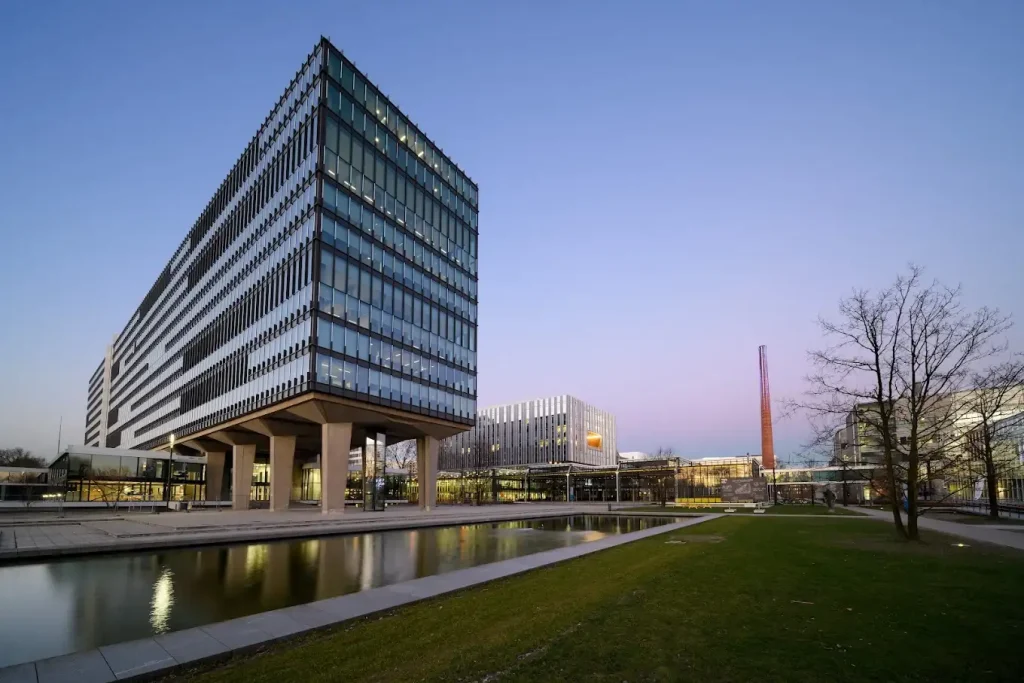
Located in the Brainport Eindhoven region, one of Europe’s most concentrated clusters of high-technology industry, anchored by companies including ASML and Philips, TU/e operates with an unusually tight integration between its academic programs and regional industrial partners. Its bachelor’s curriculum is organized around challenge-based learning rather than conventional lecture structures. Among the institutions on this list, TU/e offers the broadest range of English-taught engineering bachelor’s programs at a single institution, spanning seven distinct disciplines.
- QS Engineering & Technology Ranking: #91
- Tuition Fee (EU/EEA): €2,601/year
- Tuition Fee (Non-EU): ~€13,800/year
English Programs
- BSc Mechanical Engineering
- BSc Automotive Technology
- BSc Computer Science and Engineering
- BSc Electrical Engineering
- BSc Chemical Engineering and Chemistry
- BSc Biomedical Engineering
- BSc Sustainable Innovation
- BSc Built Environment
10. Sapienza University of Rome | Italy
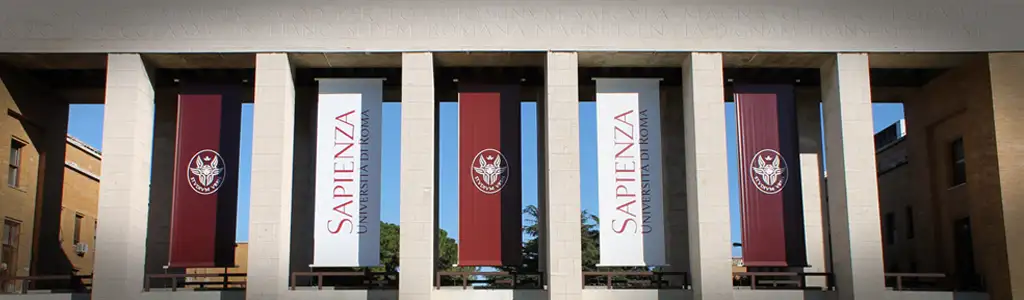
As one of the oldest and largest universities in Europe, Sapienza combines historic prestige with modern research facilities. It serves as a major center for academic research in Southern Europe. To attract a more global undergraduate student body, the university has been rapidly expanding its English-taught technological and engineering programs.
- QS Engineering & Technology Ranking: #99
- Tuition Fee (EU/EEA): €156 – €3,000/year (Scaled by family income)
- Tuition Fee (Non-EU): ~€1,000 – €1,200/year
English Programs
- BSc Applied Computer Science and Artificial Intelligence
- BSc Sustainable Building Engineering
11. Trinity College Dublin | Ireland
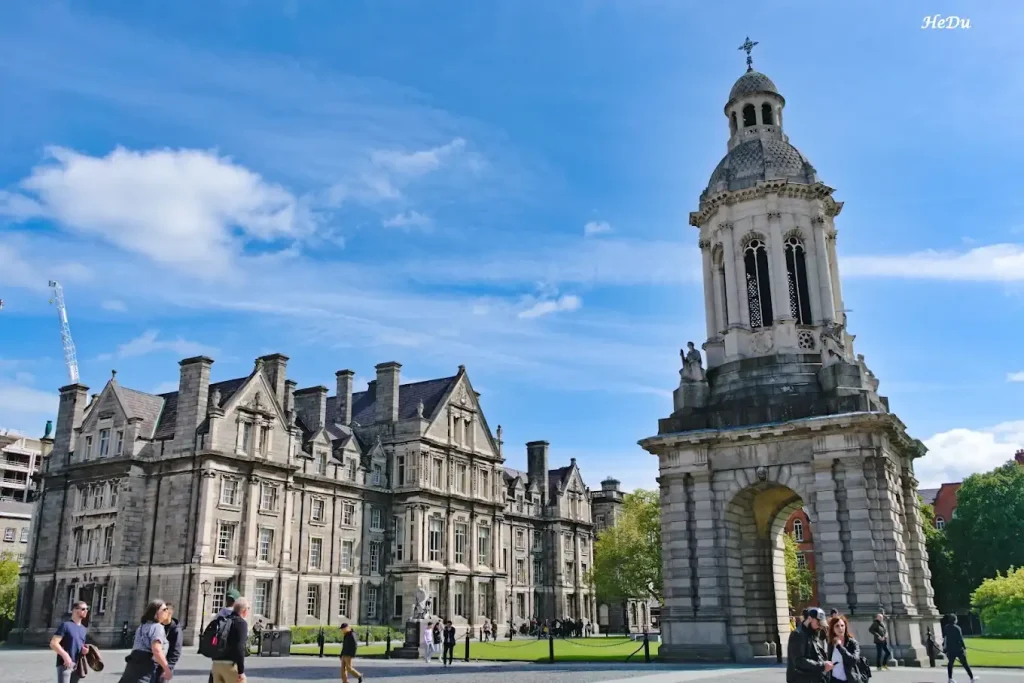
Ireland’s oldest university, founded in 1592, Trinity combines historic institutional standing with direct integration into Dublin’s technology and financial services economy. For international students considering studying in Ireland, it represents one of the most globally recognized entry points into European engineering education. Its engineering faculty operates on a common-entry model: students are admitted to a broad engineering program and select their discipline specialization at the end of the second year.
- QS Engineering & Technology Ranking: #149
- Tuition Fee (EU/EEA): ~€3,000/year (Student Contribution Fee)
- Tuition Fee (Non-EU): ~€27,000/year
English Programs
- BSc Engineering (Common entry leading to Civil, Structural, Environmental, Mechanical, Electronic, or Computer)
- BSc Engineering with Management
12. Università di Padova | Italy
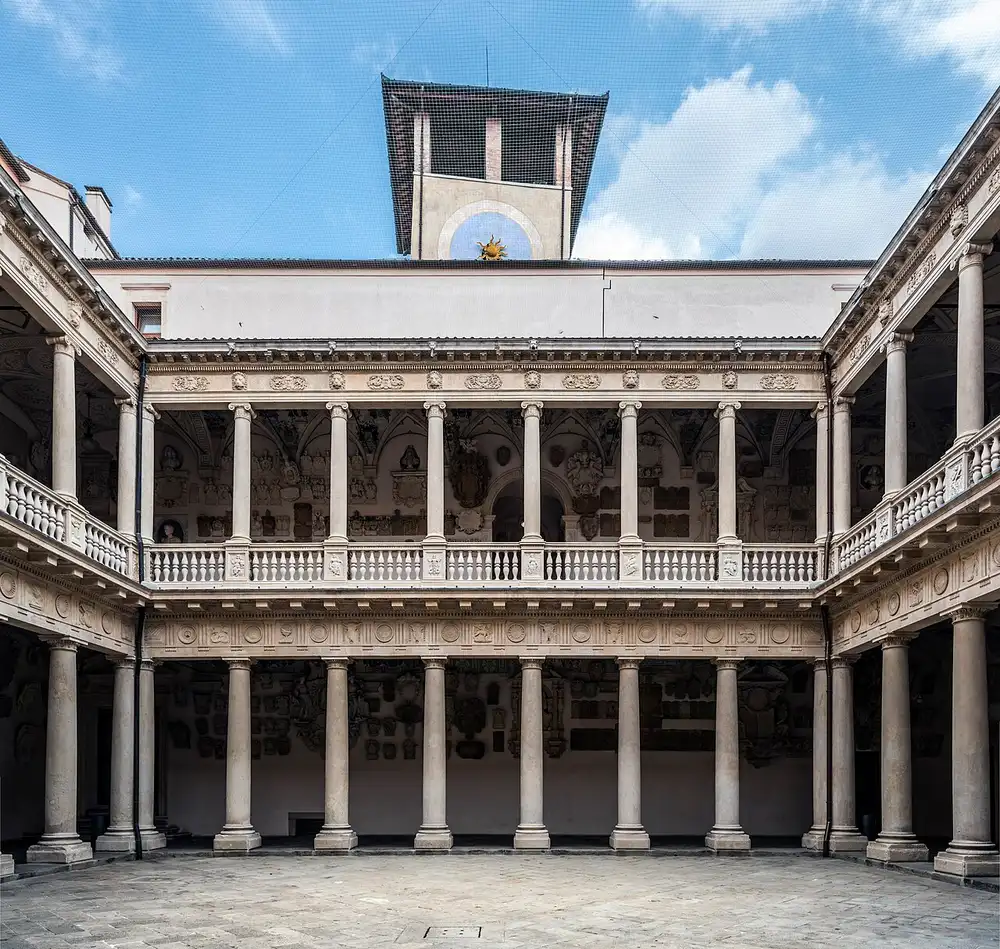
Founded in 1222, the University of Padua is among the oldest universities in continuous operation in the world. Galileo Galilei held the chair of mathematics at Padua for eighteen years, a biographical detail that reflects the institution’s long-standing orientation toward the physical sciences and engineering. Today, it is a top-performing Italian university with a rapidly growing and dynamic international community. It offers highly focused, forward-looking engineering degrees fully in English.
- QS Engineering & Technology Ranking: #155
- Tuition Fee (EU/EEA): €156 – €3,000/year (Scaled by family income)
- Tuition Fee (Non-EU): ~€3,000/year
English Programs
- BSc Information Engineering
13. University College Dublin (UCD) | Ireland
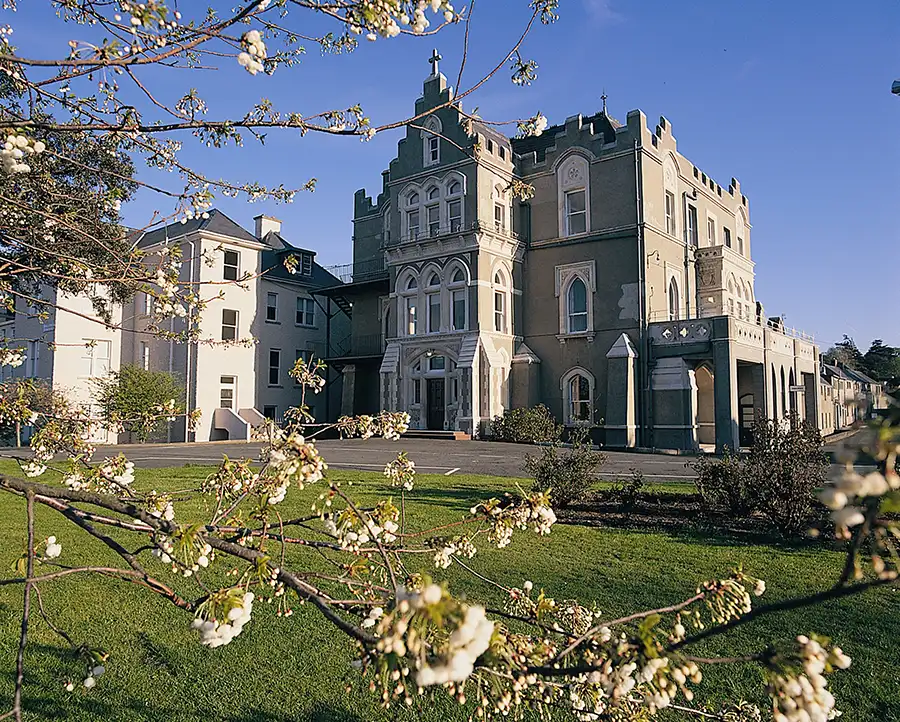
UCD is Ireland’s largest and most globally engaged university, featuring a massive, modern campus just outside central Dublin. It acts as a major talent hub for the country’s booming multinational tech and pharmaceutical sectors. Similar to Trinity, it uses a versatile common-entry engineering model that allows students to explore before selecting a major.
- QS Engineering & Technology Ranking: #191
- Tuition Fee (EU/EEA): ~€3,000/year (Student Contribution Fee)
- Tuition Fee (Non-EU): ~€29,000/year
English Programs
- BSc Engineering Science (Common entry leading to Biomedical, Chemical, Civil, Electrical, or Mechanical)
14. Aalto University | Finland

Formed in 2010 through the merger of three major Finnish universities, Aalto operates as a multidisciplinary institution at the intersection of technology, business, and design. Its engineering programs are based in the Helsinki metropolitan area. English-taught undergraduate programs at Aalto use a flexible major and minor system, allowing students to construct a degree combining engineering with adjacent disciplines in economics or design.
- QS Engineering & Technology Ranking: #194
- Tuition Fee (EU/EEA): Free
- Tuition Fee (Non-EU): €12,000/year
English Programs
- BSc Science and Technology (Majors in Chemical Engineering, Computational Engineering, Digital Systems and Design)
15. Czech Technical University in Prague | Czech Republic
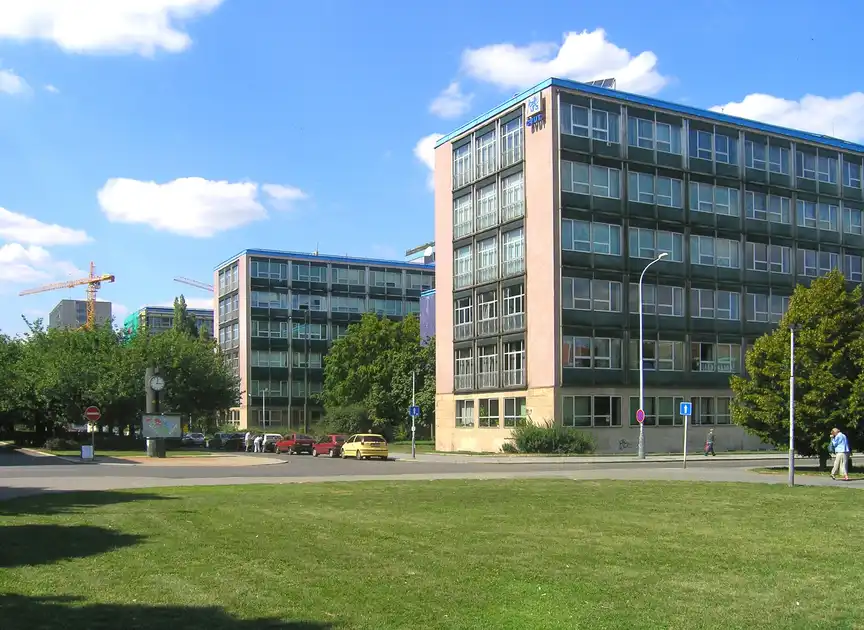
One of the oldest technical universities in Central Europe, CTU was founded in 1707 and has operated continuously as a research and engineering institution. It offers a very affordable cost of living in one of Europe’s most beautiful and historic capitals. English-taught programs at CTU charge fees independent of the Czech public tuition framework, though the resulting costs remain substantially below those of Western European equivalents.
- QS Engineering & Technology Ranking: #198
- Tuition Fee (EU/EEA): ~€4,500/year
- Tuition Fee (Non-EU): ~€4,500/year
English Programs
- BSc Mechanical Engineering
- BSc Information Technology
- BSc Electrical Engineering and Computer Science
- BSc Civil Engineering
How to Apply to Engineering Programs in Europe as an International Student
Most international universities in Europe accept applications directly through their own online portals, with no single centralized system covering the continent as a whole. Many countries, however, operate their own national platforms:
- Netherlands: Studielink
- Ireland: CAO
- Sweden: Universityadmissions.se
- Finland: Studyinfo.fi
- Germany: uni-assist clearinghouse (required before applying directly to the German university)
Deadlines vary by country and institution, but most programs open applications in the autumn for a September intake, with deadlines falling between January and April.
Entry requirements across these institutions follow a consistent pattern. A strong secondary school record with demonstrated competency in mathematics and physics is the baseline expectation at every institution on this list. Given the variation in requirements across countries, working with an experienced European university admissions consultant can provide clarity on what each program expects.
English language proficiency is required for all programs, with most institutions accepting IELTS or TOEFL scores, and the common minimum threshold sitting between IELTS 6.0 and 6.5, though competitive programs at higher-ranked institutions may set higher benchmarks.
Some programs, particularly in Italy and the Czech Republic, require an entrance assessment or motivation letter in addition to academic transcripts. Italian engineering programs for international students frequently use the TOLC-I exam, while Czech technical universities often require specialized mathematics and physics assessments.
Looking to Study Engineering in Europe?
The best engineering schools in Europe span multiple countries, each with its own admissions process, documentation requirements, and application timelines. Identifying the right program is one decision. Building a competitive application strategy across multiple systems is another.
McMillan Education International has placed students from 65+ countries at universities worldwide. With decades of experience across admissions systems, entry requirements, and program selection, educational consultants with deep expertise in European university admissions provide guidance from the earliest stages of planning through to application.
To discuss your academic goals and engineering program options, schedule a free consultation.
Frequently Asked Questions
1. Do European engineering programs teach in English at bachelor’s level?
Yes, but selectively. Most top European engineering universities teach their bachelor’s programs in the national language and reserve English instruction for the master’s level. A smaller number of institutions, primarily in the Netherlands, Italy, Ireland, and Scandinavia, offer fully English-taught engineering bachelor’s degrees.
2. Where can I study aerospace engineering in English in Europe?
TU Delft (Netherlands), Technical University of Munich (Germany), and Trinity College Dublin (Ireland) offer fully English-taught aerospace engineering at bachelor’s level.
3. Which European universities offer chemical engineering in English?
Politecnico di Milano (Italy), KU Leuven (Belgium), Eindhoven University of Technology (Netherlands), Aalto University (Finland), Trinity College Dublin, and University College Dublin all offer chemical engineering programs taught in English at bachelor’s level.
4. What are some well-regarded universities in Europe for civil engineering in English?
Politecnico di Milano, Politecnico di Torino, and Sapienza University of Rome offer English-taught civil and str
uctural engineering bachelor’s programs in Italy. Trinity College Dublin and University College Dublin cover civil engineering through their common-entry engineering programs in Ireland. Czech Technical University in Prague offers a dedicated English civil engineering bachelor’s in Central Europe.
5. Can international students work in Europe after an engineering degree?
Most European countries offer post-study work visas for international graduates. Germany’s Job Seeker Visa allows graduates up to 18 months to find employment. The Netherlands offers a one-year Orientation Year permit. Ireland provides a two-year stay-back allowance for non-EU graduates. Conditions and eligibility vary by country and are subject to change; verify current visa regulations with the relevant national immigration authority before making decisions based on post-study work rights.
6. Is studying engineering in Europe cheaper than in the US or UK?
In most cases, yes. Several European countries charge no tuition fees or only nominal administrative fees for EU students, and relatively moderate fees for non-EU students compared to US or UK equivalents. The Netherlands and Ireland are exceptions, with non-EU fees at some institutions comparable to UK levels. Cost of living also varies significantly; Prague and Rome are considerably more affordable than Amsterdam or Dublin.
7. What grades do I need to get into engineering programs in Europe?
For a student who wants to study engineering, the consistent baseline across all European universities is strong performance in mathematics and physics at secondary school level. Competitive programs at TU Delft, TUM, and Politecnico di Milano typically require high grades and, in some cases, selective admission processes. Less competitive institutions on this list, such as Czech Technical University in Prague, have more accessible entry thresholds while still maintaining accredited academic standards.