International students are increasingly looking at English-taught MD programs in Europe, and it is not difficult to see why. European medical schools allow for direct entry from high school and generally do not require the MCAT, yet consistently produce physicians who practice across the world’s most competitive healthcare systems.
In this article, we cover medical schools in Europe taught in English, offering single-cycle integrated MD programs, where a student enters directly from secondary school and graduates as a fully qualified medical doctor.
Quick Look: Medical Schools in Europe Taught in English
| University | QS Ranking | Degree / Program | Length | Tuition Fee | Admissions Pathway |
|---|---|---|---|---|---|
| University of Oxford England | #2 | Medicine (BM BCh) | 6 years | £46,600 (Preclinical) to £61,560 (Clinical) per year | UCAS + UCAT |
| University of Cambridge England | #5 | Medicine (MB BChir) | 6 years | ~£70,554 per year (plus college fees of £10,000–£13,000) | UCAS + UCAT |
| UCL England | #6 | Medicine (MBBS) | 6 years | ~£53,400 per year | UCAS + UCAT |
| King’s College London England | Top 15 | Medicine (MBBS) | 5 years | ~£53,000 per year | UCAS + UCAT |
| University of Edinburgh Scotland | #22 | Medicine (MBChB) | 6 years | ~£51,961 per year | UCAS + UCAT |
| University of Glasgow Scotland | 51–100 | Medicine (MBChB) | 5 years | ~£58,890 per year | UCAS + UCAT |
| University of Milan Italy | ~#65 | Medicine and Surgery (MD equivalent) | 6 years | Income-based (ISEE); ~€156–€4,100 per year | IMAT |
| Sapienza University of Rome Italy | ~#72 | Medicine and Surgery (MD equivalent) | 6 years | Income-based (ISEE); ~€1,000–€3,000 per year | IMAT |
| Trinity College Dublin Ireland | #95 | Medicine (MB BCh BAO) | 5 years | ~€55,000 per year | Non-EU Direct Application (EU: CAO + HPAT) |
| Cardiff University Wales | 101–150 | Medicine (MBBCh) | 5 years | ~£45,450 per year | UCAS + UCAT |
| Charles University Czech Republic | #146 | General Medicine (MUDr. / MD equivalent) | 6 years | ~€21,000 per year | Institution-specific entrance exam (Biology, Chemistry, Physics/Math) |
| Queen’s University Belfast Northern Ireland | 151–200 | Medicine (MB BCh BAO) | 5 years | ~£38,400 per year (plus £11,500 clinical placement levy) | UCAS + UCAT |
| University of Aberdeen Scotland | 151–200 | Medicine (MBChB) | 5 years | ~£50,100 per year | UCAS + UCAT |
| Semmelweis University Hungary | 201–250 | General Medicine (MD) | 6 years | ~$19,200 per year | Institution-specific written and oral entrance exam |
| Jagiellonian University Poland | 301–350 | Medicine (MD equivalent) | 6 years | ~€15,000–€16,000 per year | Institution-specific entrance exam and academic assessment |
Why International Students Are Choosing English-Taught MD Programs in Europe
European medical education operates on a structurally different model from other major destinations. The undergraduate MD is a five to six-year integrated program, requiring no pre-medical undergraduate degree and no MCAT. Medical education in Australia, the United States, and Canada follows a graduate-entry structure, in which a completed bachelor’s degree is a prerequisite for medical faculty admission. A student presenting strong secondary school results in the sciences can apply directly to a European medical faculty and qualify as a physician within that timeframe.
Tuition fees across European universities are considerably more affordable than comparable programs in North America and Australia, particularly at public universities. For graduates intending to practice across borders, degrees awarded by EU member state institutions carry automatic recognition across all 27 member states, a regulatory advantage with direct career implications.
Europe’s medical faculties also have a long-established research tradition, and clinical training at most institutions takes place within public healthcare systems serving large and diverse patient populations, which bears directly on the breadth of clinical exposure during the degree.
How This List of European Medical Schools Was Compiled
Fully English-taught undergraduate MD programs are considerably less common in Europe than general searches suggest. The majority of English-language medical education available at European universities operates at the postgraduate level, in research degrees and specialist master’s programs. The five to six-year integrated undergraduate MD, entered from secondary school and conducted entirely in English, represents a distinct and narrower category that requires specific verification before any application decision is made.
This list applies two criteria. The first is confirmed availability of a fully English-taught undergraduate MD or equivalent degree program, meaning English as the language of instruction across the complete 5 or 6 years, not selected coursework or postgraduate offerings.
The second is institutional standing: the list is capped to universities ranked within the top 350 in the QS World University Rankings by Subject 2026 for Medicine. The full list of European universities offering English-taught MD programs is longer.
European Medical Schools With English-Taught MD Programs
Below is a selection of European medical schools taught in English, offering undergraduate MD programs for international students. This is not a ranking of program quality, nor an endorsement of one institution over another. Europe has many other universities offering MD programs outside this selection. Families whose priorities extend beyond this list will find a broader range of options worth researching independently or with the guidance of an international admissions consultant.
1. University of Oxford (England)
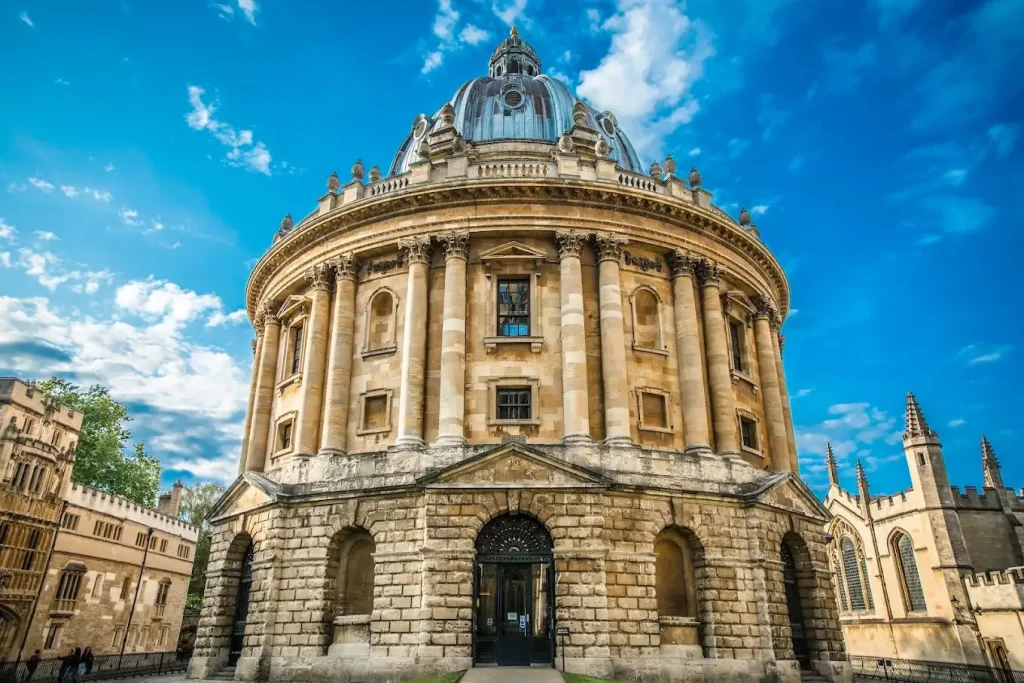
Oxford’s medical curriculum provides a highly rigorous preclinical grounding before transitioning to intense clinical training in later years. It consistently ranks among the most prestigious medical schools globally, operating heavily on a small-group collegiate system. Preclinical and clinical years are entirely split, and students graduate with an integrated BA degree in Medical Sciences after their third year before proceeding to clinicals.
- QS ranking: #2
- Degree/Program name: Medicine (BM BCh)
- Program length: 6 years
- Tuition fee: £46,600 (Preclinical) to £61,560 (Clinical) per year
- Admissions pathway: UCAS + UCAT
2. University of Cambridge (England)
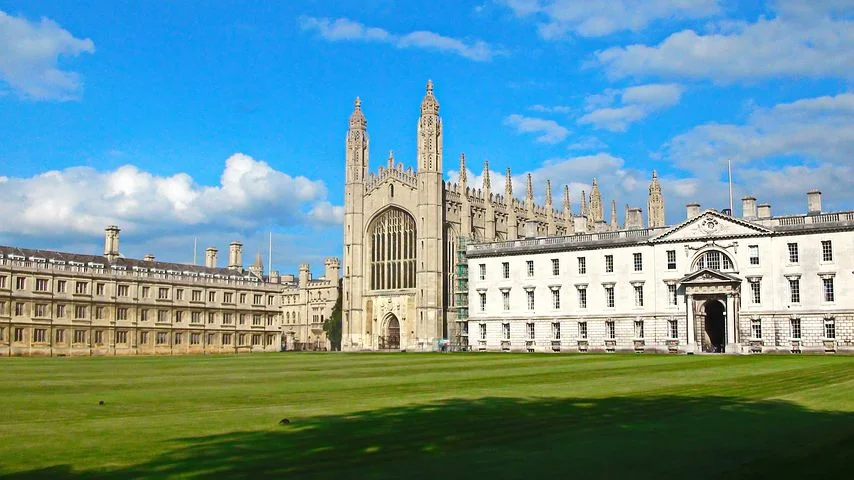
Cambridge focuses heavily on the rigorous scientific and research basis of medicine before beginning clinical rotations. The program is academically demanding and benefits from world-class research facilities at the biomedical campus. It is one of the few medical schools in the world that still features a full-body cadaveric dissection program as a core part of its curriculum in the first two years.
- QS ranking: #5
- Degree/Program name: Medicine (MB BChir)
- Program length: 6 years
- Tuition fee: ~£70,554 per year (plus additional college fees of £10,000–£13,000)
- Admissions pathway: UCAS + UCAT
3. UCL (England)

Centrally located in London, UCL integrates clinical skills from the very beginning while maintaining a strong scientific core. It is deeply embedded within multiple major London teaching hospitals, offering diverse patient exposure. An integrated iBSc is a core part of the program, required during the third year to help students develop advanced research skills.
- QS ranking: #6
- Degree/Program name: Medicine (MBBS)
- Program length: 6 years
- Tuition fee: ~£53,400 per year
- Admissions pathway: UCAS + UCAT
4. King’s College London (England)
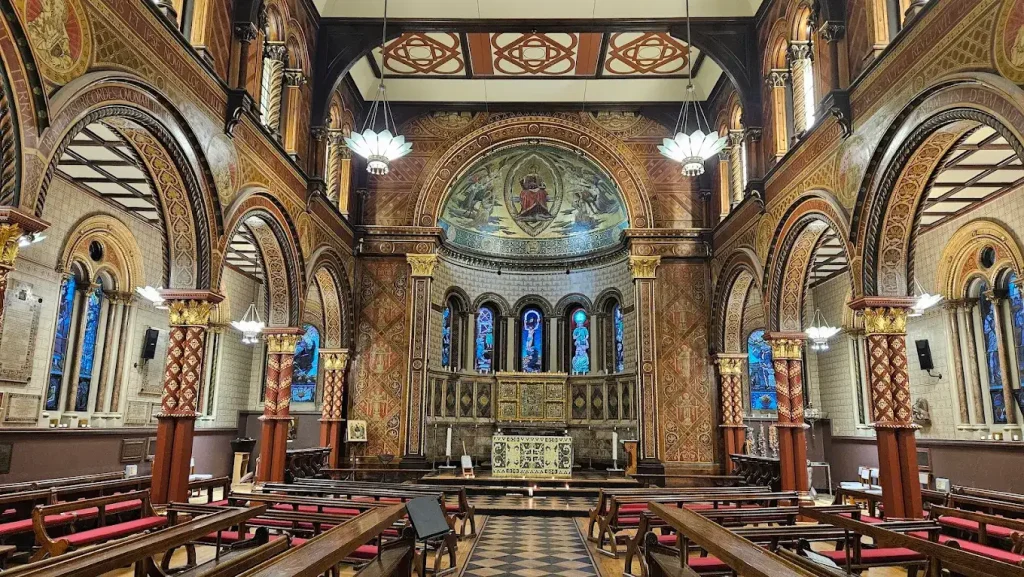
King’s boasts an extensive medical school tied to prestigious teaching hospitals like Guy’s, King’s College, and St Thomas’. The curriculum emphasizes patient contact from year one. It houses the Florence Nightingale Faculty and offers unparalleled trauma and emergency medicine clinical exposures in central London.
- QS ranking: ~Top 15 globally
- Degree/Program name: Medicine (MBBS)
- Program length: 5 years
- Tuition fee: ~£53,000 per year
- Admissions pathway: UCAS + UCAT
5. University of Edinburgh (Scotland)

Edinburgh’s medical school offers a modern, systems-based curriculum with a strong focus on research and clinical competence. It is steeped in history as one of the oldest and most respected medical institutions in the English-speaking world, with a historical connection to figures like Joseph Lister and Arthur Conan Doyle.
- QS ranking: #22
- Degree/Program name: Medicine (MBChB)
- Program length: 6 years
- Tuition fee: ~£51,961 per year
- Admissions pathway: UCAS + UCAT
6. University of Glasgow (Scotland)
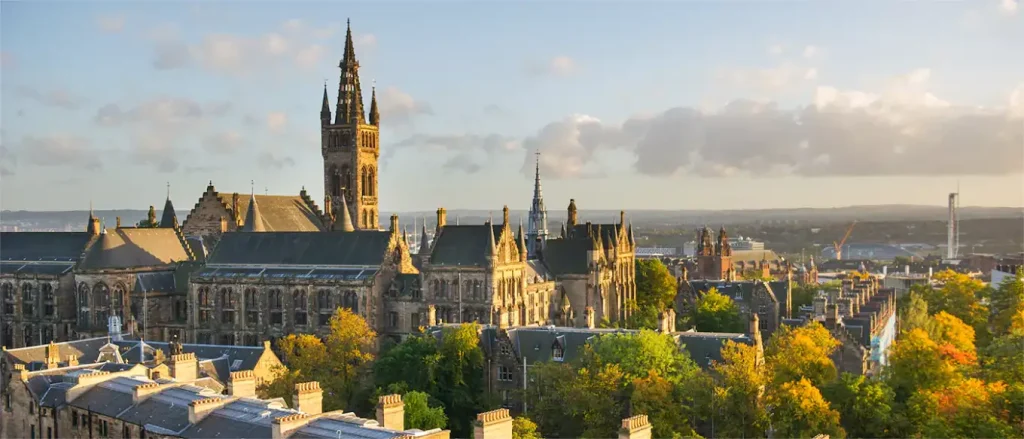
Glasgow utilizes a highly integrated, spiral curriculum heavily built around problem-based learning (PBL). It maintains strong partnerships with the NHS, providing vast and diverse clinical placements across western Scotland. The Wolfson Medical School Building was specifically designed around problem-based learning, featuring state-of-the-art bespoke clinical skills areas.
- QS ranking: 51–100
- Degree/Program name: Medicine (MBChB)
- Program length: 5 years
- Tuition fee: ~£58,890 per year
- Admissions pathway: UCAS + UCAT
7. University of Milan (Italy)
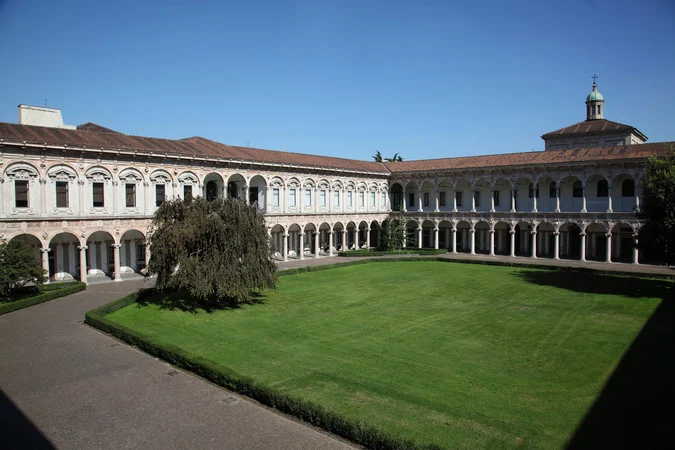
The International Medical School (IMS) at Milan blends problem-based learning with a robust clinical science foundation. It operates closely with several top-tier teaching hospitals in the Lombardy region, including the Niguarda Hospital. Tuition is calculated strictly on the student’s family income rather than standard international fee brackets, making it highly affordable for many applicants.
- QS ranking: ~#65
- Degree/Program name: Medicine and Surgery (MD equivalent)
- Program length: 6 years
- Tuition fee: Income-based (ISEE); ~€156–€4,100 per year
- Admissions pathway: IMAT
8. Sapienza University of Rome (Italy)
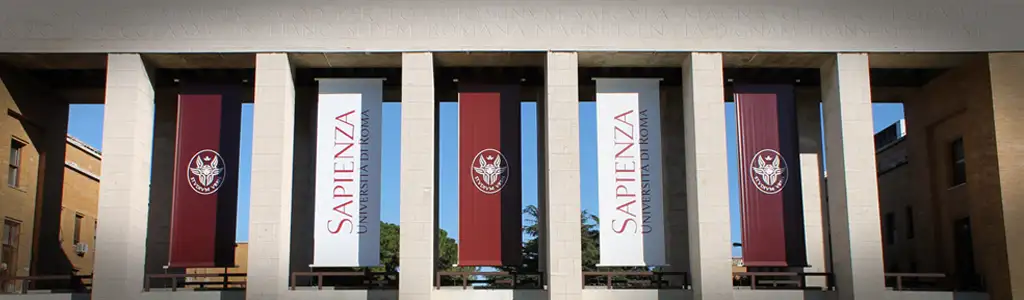
Sapienza offers a popular 6-year English medical program with a massive international cohort. It leverages its status as one of Europe’s most historic universities to provide diverse clinical settings. Clinical training is directly linked to the Policlinico Umberto I, one of the most prominent public research hospitals in Europe.
- QS ranking: ~#72
- Degree/Program name: Medicine and Surgery (MD equivalent)
- Program length: 6 years
- Tuition fee: Income-based (ISEE); ~€1,000–€3,000 per year
- Admissions pathway: IMAT
9. Trinity College Dublin (Ireland)
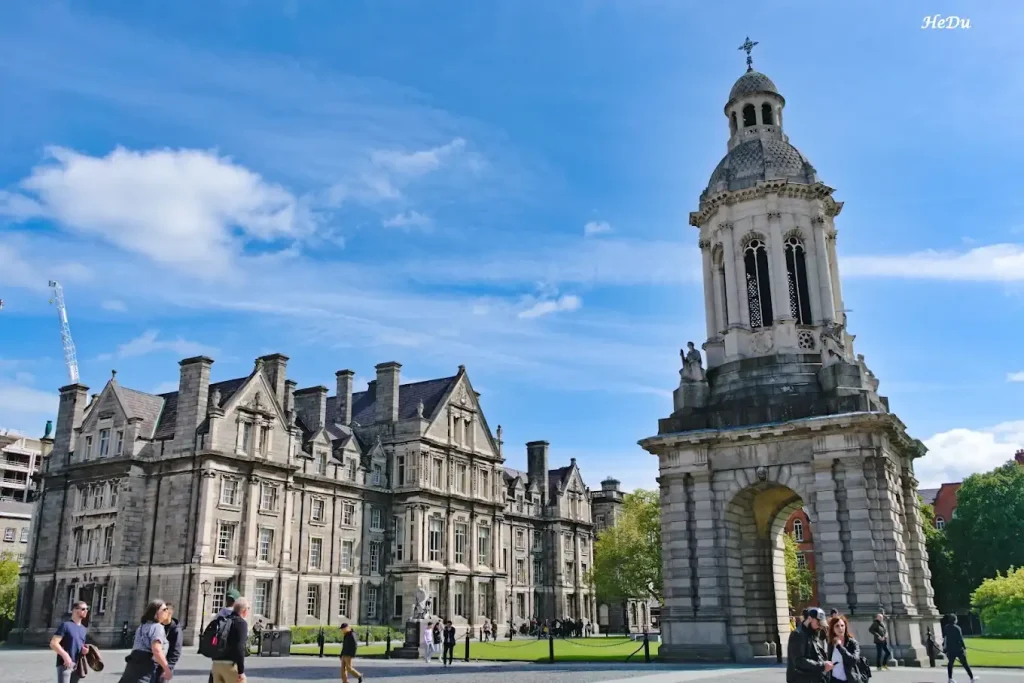
TCD offers a prestigious, highly academic medical degree with deep roots in Irish history. The program seamlessly blends basic sciences with extensive clinical attachments in major Dublin teaching hospitals. Graduates receive three distinct degrees concurrently: Bachelor of Medicine, Bachelor of Surgery, and Bachelor of Obstetrics (BAO), a tradition unique to Irish universities.
- QS ranking: #95
- Degree/Program name: Medicine (MB BCh BAO)
- Program length: 5 years
- Tuition fee: ~€55,000 per year
- Admissions pathway: Non-EU Direct Application (EU students use CAO + HPAT)
10. Cardiff University (Wales)

Cardiff offers a spiraling, case-based learning (CBL) curriculum that focuses heavily on patient interaction early on. Students benefit from placements across the entirety of Wales, gaining both rural and urban healthcare experience across highly specialized urban trauma centers and remote rural clinics.
- QS ranking: 101–150
- Degree/Program name: Medicine (MBBCh)
- Program length: 5 years
- Tuition fee: ~£45,450 per year
- Admissions pathway: UCAS + UCAT
11. Charles University (Czech Republic)
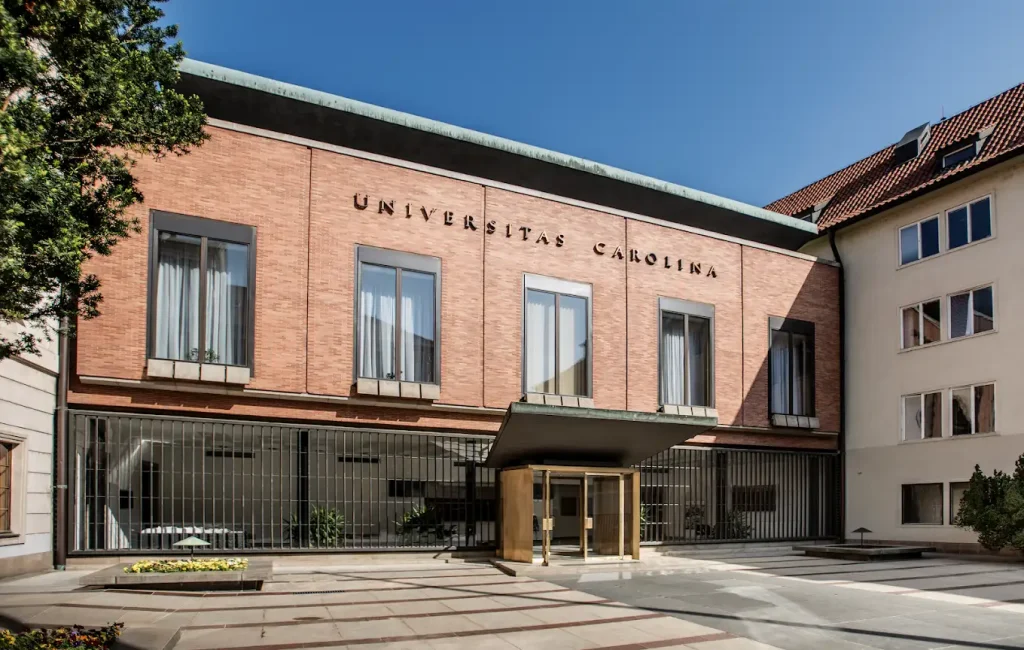
Charles University offers multiple English medical faculties, each with distinct teaching styles and atmospheres. It provides a classical, highly rigorous European medical education built on intense oral examinations. International students have the unique choice to apply to five distinct, semi-autonomous medical faculties, three in Prague, two in other cities, each with its own admissions process.
- QS ranking: #146
- Degree/Program name: General Medicine (MUDr. / MD equivalent)
- Program length: 6 years
- Tuition fee: ~€21,000 per year
- Admissions pathway: Institution-specific entrance exam (Biology, Chemistry, Physics/Math)
12. Queen’s University Belfast (Northern Ireland)
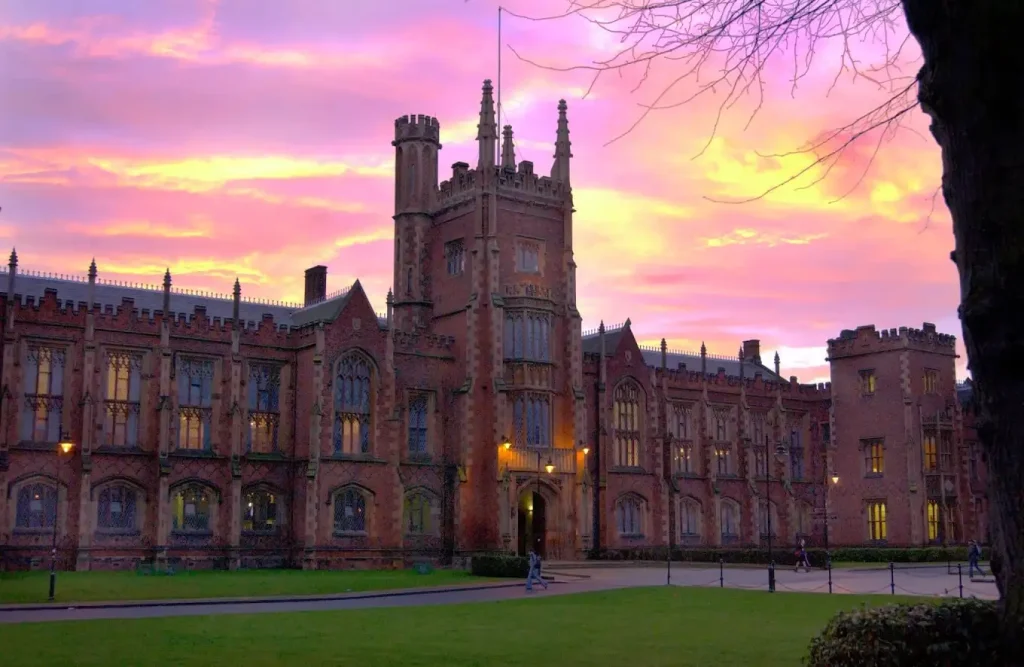
QUB features an integrated curriculum heavily focused on clinical skills, anatomical sciences, and early patient contact. It is one of the few UK universities offering a specific pathway that heavily trains students across Northern Ireland’s unique integrated health and social care trusts.
- QS ranking: 151–200
- Degree/Program name: Medicine (MB BCh BAO)
- Program length: 5 years
- Tuition fee: ~£38,400 per year (plus an £11,500 annual clinical placement levy)
- Admissions pathway: UCAS + UCAT
13. University of Aberdeen (Scotland)
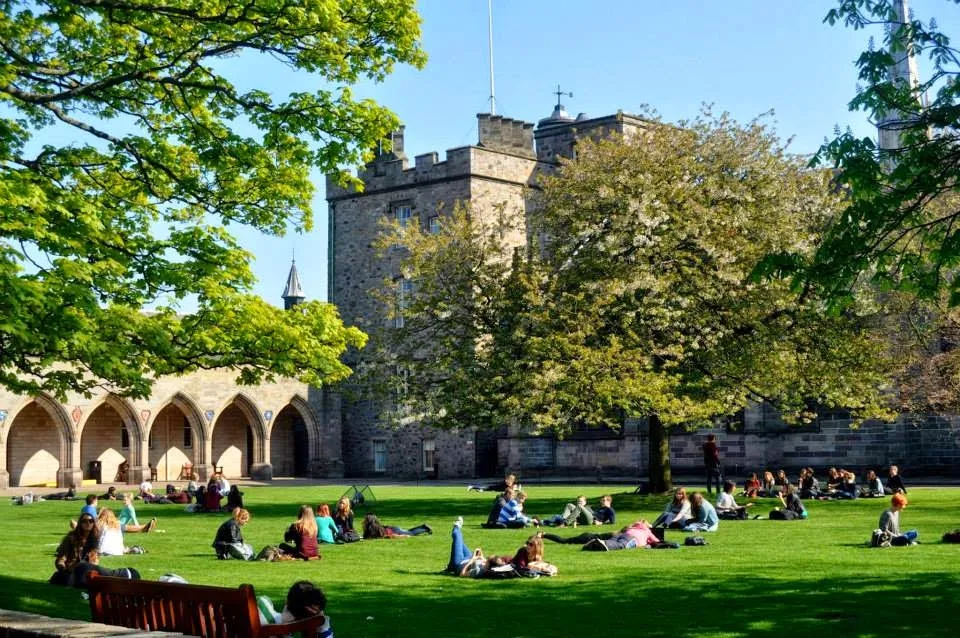
Aberdeen combines a modern, systems-based approach with excellent clinical facilities and a very supportive student environment. Its medical campus is heavily integrated with the regional health board, and it sits on one of the largest clinical teaching sites in Europe (the Foresterhill campus), physically placing the university classrooms and the main teaching hospital side-by-side.
- QS ranking: 151–200
- Degree/Program name: Medicine (MBChB)
- Program length: 5 years
- Tuition fee: ~£50,100 per year
- Admissions pathway: UCAS + UCAT
14. Semmelweis University (Hungary)

Semmelweis is the premier medical institution in Hungary, boasting a massive international student body and rigorous clinical training. Its English-taught program is specifically tailored for foreign students, with approximately 30–40% of the student body drawn from abroad, making it one of the most distinctly multicultural medical universities in Central Europe.
- QS ranking: 201–250
- Degree/Program name: General Medicine (MD)
- Program length: 6 years
- Tuition fee: ~$19,200 per year
- Admissions pathway: Institution-specific written and oral entrance exam
15. Jagiellonian University (Poland)
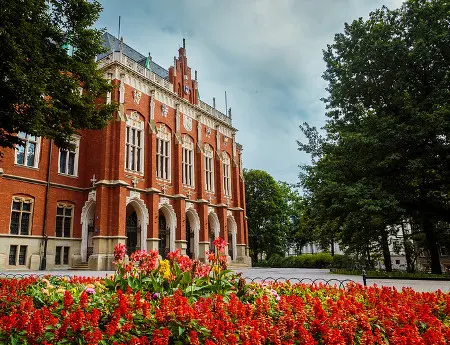
Located in historic Krakow, the Jagiellonian University Medical College follows a traditional, thorough curriculum meeting EU standards. The English program explicitly caters to a large North American and international applicant pool. The curriculum is very well-suited for USMLE preparation, making it a popular choice for international students intending to match into residencies in the United States or Canada.
- QS ranking: 301–350
- Degree/Program name: Medicine (MD equivalent)
- Program length: 6 years
- Tuition fee: ~€15,000–€16,000 per year
- Admissions pathway: Institution-specific entrance exam and academic assessment
Admissions Overview: What International Students Need to Know
European medical school admissions do not operate through a single centralized system. The 15 institutions in this article use five distinct admissions pathways, varying by country and in some cases by individual faculty within the same university. A student applying to multiple institutions across different countries may be sitting different entrance exams, submitting to different portals, and working to different deadlines simultaneously. For families navigating this landscape, guidance from an educational consultant with cross-border admissions experience is worth considering early in the process.
Despite the variation in systems, certain requirements apply broadly across all 15 institutions: strong secondary school results with Biology and Chemistry as near-universal prerequisites, English proficiency documentation for non-native speakers, and translated and notarised academic documents for most continental European applications. Admission requirements change annually. Families should verify current entry criteria directly with each institution before making any application decision.
Apply to Medical Schools in Europe
English-taught MD programs in Europe represent a genuinely competitive and structurally distinct pathway to a medical qualification. The 15 institutions in this article span multiple countries and admissions systems, each with its own timelines, entrance exams, and documentation requirements. Identifying the right program is one decision. Building an application strategy across multiple systems is another.
McMillan Education’s consultants have guided students from more than 65 countries through international university admissions, including European medical school applications. Schedule a free consultation to discuss your options with European university admissions consultants.
Frequently Asked Questions
1. How long does it take to complete a medical degree in Europe?
Medical degrees at European institutions covered in this article are five to six years in duration, entered directly from secondary school. The exact length varies by country and institution. UK programs are typically five years, with some six-year programs that include an intercalated research year. Continental European programs are generally six years.
2. Can international students study medicine in Europe without learning the local language?
At the institutions listed in this article, the language of instruction for lectures, examinations, and coursework is English. However, clinical rotations involve direct patient interaction, which in most continental European countries requires at least basic proficiency in the local language. Students should verify the clinical language requirements of each institution directly before applying.
3. Do medical schools in Germany, France, or Switzerland teach medicine in English?
No. Medical degrees at German, French, and Swiss universities are taught in the national language, and state licensing examinations are conducted exclusively in German or French. English-language instruction at these institutions is available at the postgraduate and research level only. International students without the required language proficiency cannot complete the undergraduate MD at these institutions.
4. What are the tuition fees for English-taught medical programs in Europe?
Fees vary considerably by country and institution. Italian public universities calculate fees based on family income, making them among the most affordable in Europe. Central European institutions typically charge between approximately €15,000 and €21,000 per year. UK institutions charge higher fees for international students, generally ranging from £38,000 to over £60,000 per year, depending on the institution and year of study.
5. Can Americans and international students go to medical school in Europe?
Yes. The institutions in this article accept international applicants, including students from the United States, and many have substantial international student cohorts. Admission requirements, entrance exams, and application timelines vary by institution and country. Entry requirements vary and should be confirmed with each institution directly.
6. Are European medical degrees recognized in the US, UK, and internationally?
Degrees from EU member state institutions are automatically recognized across all 27 member states. Recognition in the US requires graduates to sit the USMLE Steps and enter the residency match process through the ECFMG. Recognition in the UK requires GMC registration. Families should verify that any institution they are considering is listed in the World Directory of Medical Schools, which is a prerequisite for USMLE eligibility.
7. Do European medical schools award an MD or MBBS degree?
Both. UK institutions award MBBS or MBChB, depending on the institution. Irish institutions award MB BCh BAO. Continental European institutions generally award a degree titled Doctor of Medicine or an equivalent national qualification, such as MUDr in the Czech Republic. The degree title varies by country and institution, but the qualification level is equivalent across all programs listed in this article.