Europe is on track to becoming a global hub for international students, especially for those who seek full-degree programs taught entirely in English.
Thousands of English-taught degree programs are now available across the continent, and international student enrolments are projected to grow by around 5% each year through 2030, showing that there’s real growth in English-medium instruction across the region.
For students who dream of studying abroad without a language barrier, this trend presents a unique opportunity to pursue world-class education, multicultural campus life, and seamless global mobility.
In this guide, we will tell you about the most prestigious English-speaking universities in Europe, chosen for their academic excellence, diverse communities, and accessibility.
Here at McMillan Education International, we’ve helped place students in many of these universities, so you can rest assured that this guide is grounded in real-world student experiences. Let’s get started.
Why Choose an English-Speaking University in Europe?
Want to study in Europe? English-speaking universities in Europe offer students the chance to:
- Access world-class education: Learn from renowned faculty at universities ranked among the best in the world, whether you’re pursuing engineering, medicine, liberal arts & sciences, or other disciplines, with degrees recognized globally.
- Experience a multicultural environment: Share classrooms with peers from diverse backgrounds, building global awareness and lasting international connections.
- Live in culturally rich cities: Enjoy museums, historic landmarks, architecture, cuisine, and vibrant arts scenes right on your doorstep.
- Avoid language barriers: Study fully in English while still immersing yourself in the local culture, without needing fluency in another language.
It’s an ideal option for students seeking academic excellence, cultural immersion, and global perspectives, all in an accessible, English-medium setting. With Europe being home to some of the les meilleurs pays pour les étudiants étrangers, it’s no surprise these institutions continue to attract ambitious learners from across the globe.
|
University |
Location |
QS Ranking 2026 |
Meilleur pour |
|
American University of Paris |
Paris, France |
Unranked |
American-style liberal arts experience in the heart of Paris and preparation for international careers |
|
Bocconi University |
Milan, Italy |
#9 |
Business, economics, and building strong industry connections in global markets |
|
IE University |
Segovia, Spain |
#32 (by Subject) |
Innovation, global mobility, and entrepreneurial thinking in business, law, and design |
|
École Hôtelière de Lausanne |
Lausanne, Switzerland |
#1 (Hospitality) |
Global leadership roles in the hospitality, tourism, and luxury industries |
|
KU Leuven |
Leuven, Belgium |
#60 |
Research strength, cutting-edge facilities, and internationally recognized qualifications at a competitive price |
|
Leiden University |
Leiden, Netherlands |
#119 |
Critical thinking, interdisciplinary research, and direct engagement with European governance and policy |
|
Imperial College London |
London, England |
#2 |
World-class STEM and business academics surrounded by a culture of innovation and entrepreneurship |
|
London School of Economics |
London, England |
#56 |
Social sciences, economics, public policy, and unmatched access to global institutions in central London |
|
Trinity College Dublin |
Dublin, Ireland |
#75 |
Blending centuries of academic heritage with modern innovation in one of Europe’s leading tech hubs |
|
Semmelweis University |
Budapest, Hungary |
#251–300 (Subject) |
World-class, hands-on clinical medical training at a highly competitive cost compared to Western Europe |
|
Université John Cabot |
Rome, Italy |
Unranked |
A close-knit, personalized American-style liberal arts education in the historical center of Rome |
|
Franklin University Switzerland |
Sorengo, Switzerland |
Unranked |
Cross-border, hands-on global learning via its signature Academic Travel program |
|
Durham University |
Durham, England |
#94 |
A historic collegiate system offering personal support, strong traditions, and excellence in Arts & Humanities |
|
Queen Mary University of London |
London, England |
#110 |
Medicine, Law, Dentistry, and Engineering with strong community partnerships and direct access to professional practice |
|
SOAS University of London |
London, England |
#511 |
Global policy, rare language expertise, and in-depth regional knowledge of Africa, Asia, and the Middle East |
15 English-Speaking European Universities for International Students
Below is a carefully selected list of universities in Europe that offer degree programs taught in English for international students. This is not a ranking, nor an endorsement of one institution over another. The institutions included meet a clear, practical criterion: they are internationally recognized institutions offering fully English-taught degree programs and actively enrolling international students. Europe has many other quality institutions offering strong programs.
1. American University of Paris (France)
The American University of Paris is a US-chartered liberal arts institution sitting at the intersection of two academic traditions: American degree structure and European intellectual culture. Small classes of around 16 students and a 1:10 faculty ratio mean you’re getting a genuinely personalized education, not a lecture hall experience.
Programs in International Relations, Communications, Business, and Fashion & Cultural Studies all include credit-bearing internships, and a double major is a real option rather than an exception. For students who want an American-style degree without leaving Europe, AUP delivers that in one of the world’s most culturally rich cities.
- Location: Paris, France
- Tuition: ~€38,354 / year
- QS ranking 2026: Unranked
- International students: Students from 100+ nationalities
- Students from: 100+ countries
- English-taught programs: 100% (US-chartered institution)
- Best for: An American-style liberal arts experience in the heart of Paris and preparation for international careers.
2. Bocconi University (Italy)

Bocconi has built a reputation that extends well beyond Italy, it’s where students go when they want a European business education that employers in global markets actually recognize. Based in Milan, one of Europe’s financial and design capitals, the university places graduates directly into the networks that matter.
Undergraduate programs in Economics & Management and Global Finance sit alongside graduate offerings in Strategic Marketing and Financial Management, with an English-taught LLM in Law rounding out the portfolio. The 15,000-strong student body from 120+ countries reflects the kind of environment the programs are designed to prepare you for.
- Location: Milan, Italy
- Tuition: ~€3,500 – €17,000 / year
- QS ranking 2026: #9
- International students: ~15,000
- Students from: 120+ countries
- English-taught programs: Extensive (Many fully English-taught undergraduate and graduate degrees)
- Best for: Business, economics, and building strong industry connections in global markets
3. IE University (Spain)

IE University has built its identity around one idea: that business, law, design, and technology are no longer separate disciplines. Programs are designed around real-world projects and entrepreneurial thinking, and the 100+ student-led clubs reflect a campus culture that takes engagement seriously.
With 75-80% international enrollment across campuses in Segovia and Madrid, the environment is genuinely global before you even walk into a classroom. It’s a strong fit for students who want a European degree with an entrepreneurial edge and an international peer group from day one.
- Location: Segovia, Spain
- Tuition: ~€26,500 – €29,000 / year
- QS ranking 2026: #32 QS WUR Ranking By Subject
- International students: ~7,000–8,500 students (75–80% international)
- Students from: 130+ countries
- English-taught programs: 100%
- Best for: Innovation, global mobility, and entrepreneurial thinking in areas like business, law, and design
4. École Hôtelière de Lausanne (Switzerland)
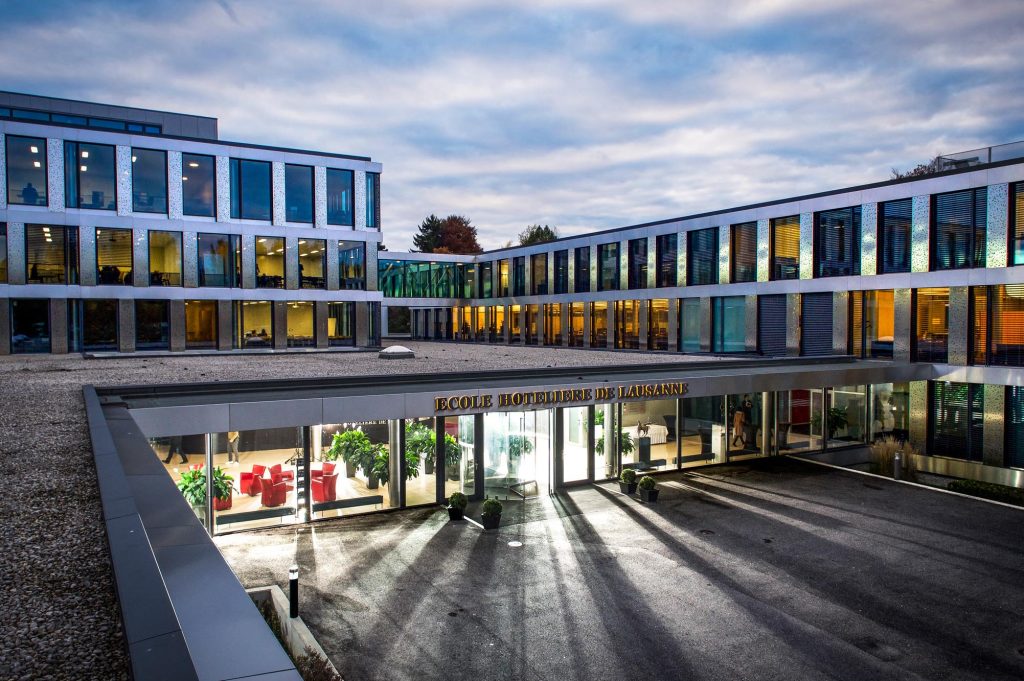
Founded in 1893, EHL is one of the most prestigious English-speaking European universities. EHL is the reference institution for hospitality education globally, it set the standard the industry still measures itself against. The curriculum combines Swiss operational precision with international business training, running hands-on learning through industry-standard labs and internships with global brands.
Popular English-taught programs include the Bachelor’s in International Hospitality Management, the Master’s in Hospitality Management (MMB), and Postgraduate Diplomas in Luxury & Brand Management.
For younger students looking to start their education journey earlier, this place is also home to some of the world’s most prestigious boarding schools in Switzerland, many of which share the same focus on international excellence.
- Location: Lausanne, Switzerland
- Tuition: ~€30,000 – €35,000 / year
- QS ranking 2026: #1 (Hospitality)
- International students: ~70–72% international enrollment
- Students from: 127 countries
- English-taught programs: 100%
- Best for: Preparing for global leadership roles in the hospitality, tourism, and luxury industries
5. KU Leuven (Belgium)
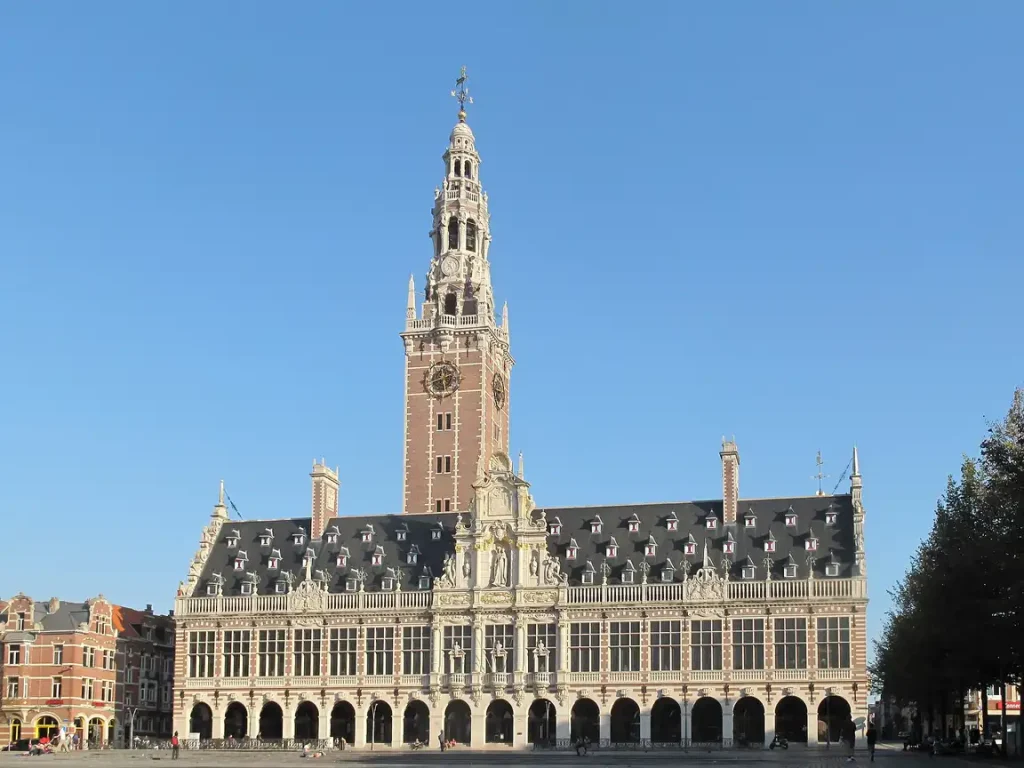
Belgium’s largest university, KU Leuven has built genuine research depth across an unusually broad range of disciplines: Engineering, Business, Biomedicine, Law, and Computer Science among them. Six bilingual Bachelor’s degrees and more than 70 English-taught Master’s programs give students real flexibility without requiring fluency in another language.
Strong European networks and industry partnerships keep the academic experience practically grounded. It suits students who want the research infrastructure of a major institution at a tuition cost well below comparable UK or Swiss options.
- Localisation : Leuven, Belgium
- Tuition: ~€835 – €1,116 / year (EU/EEA) | ~€5,600 – €9,500 / year (Non-EU / International)
- QS ranking 2026: #60
- International students: ~15,000+ students (21% international)
- Students from: 150+ countries
- English-taught programs: 6 bilingual Bachelor’s and 70+ English-taught Master’s
- Best for: Research strength, cutting-edge facilities, and internationally recognized qualifications at a competitive price
6. Leiden University (Netherlands)
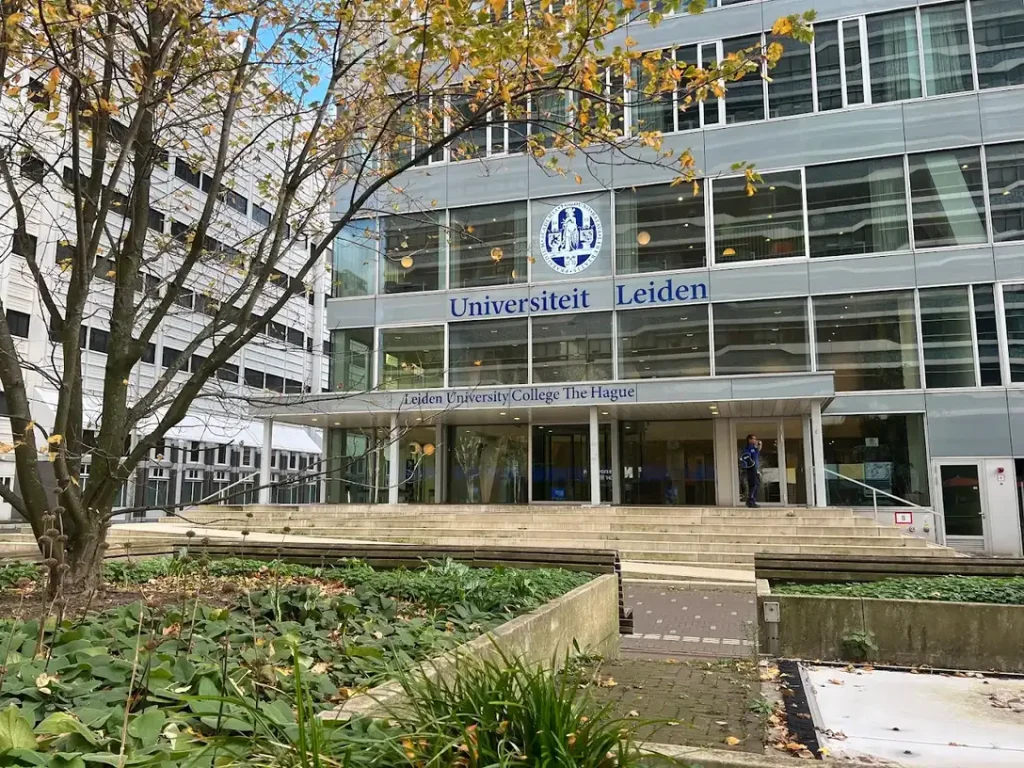
Leiden is the Netherlands’ oldest university, and its academic culture reflects that — centuries of tradition in critical thinking, interdisciplinary research, and engagement with European governance. Twelve fully English undergraduate programs cover ground from Liberal Arts & Sciences to Data Science & AI and Biomedical Sciences, with 78+ English-taught Master’s degrees extending that range considerably. The campuses in Leiden and The Hague place students close to some of Europe’s most significant political and legal institutions.
It suits students drawn to policy, law, public administration, or the sciences who want a research-oriented environment with direct access to European governance structures and a diverse, internationally minded community.
- Localisation : Leiden, Netherlands
- Tuition: ~€2,601 / year (EU/EEA) | ~€13,000 – €22,500 / year (Non-EU / International)
- QS ranking 2026: #119
- International students: ~7,500+ international students
- Students from: 120+ countries
- English-taught programs: 12 fully English undergraduate programs and 78+ Master’s degrees
- Best for: Critical thinking, interdisciplinary research, and direct engagement with European governance and policy
7. Imperial College London (England)
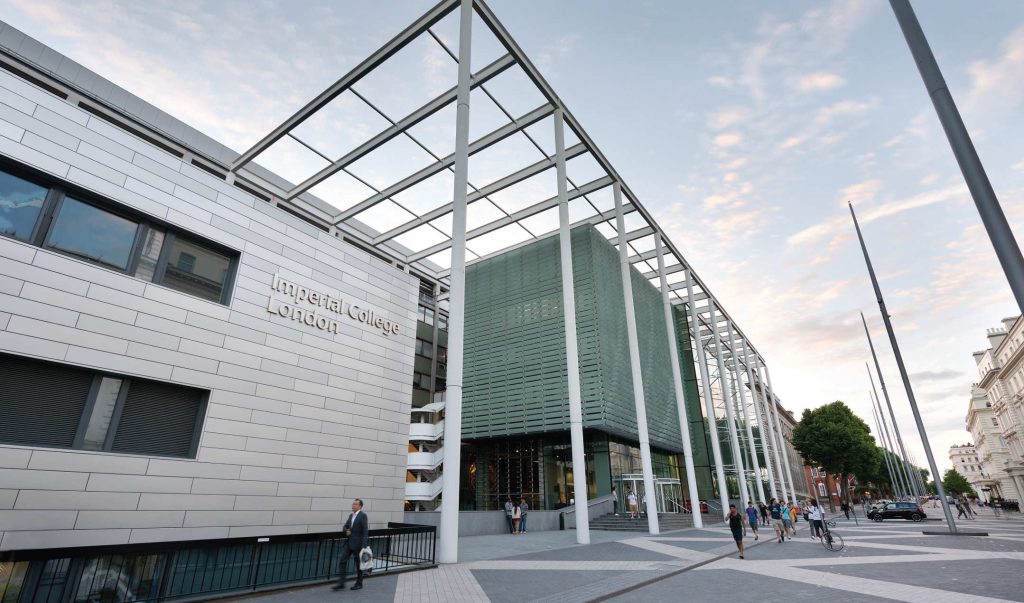
Imperial’s reputation in STEM is global, but what defines the experience on the ground is the culture of innovation it has built around that academic strength. Students can choose from a wide range of English-taught undergraduate and postgraduate degrees in Engineering, Natural & Life Sciences, Computing, Medicine, and Business through Imperial Business School, one of the leading business schools in London.
With nearly half of its 23,000 students coming from outside the UK, the community is as international as the career paths it prepares students for. As one of the flagship institutions for students who étudier au Royaume-Uni, it’s the natural choice for students who want world-class STEM or business academics in an environment where research and enterprise are genuinely integrated.
- Location: London, England
- Tuition: ~€11,700 / year (UK Home) | ~€45,000 – €50,000 / year (International)
- QS ranking 2026: #2
- International students: ~10,000+ students (45% international)
- Students from: 145+ countries
- English-taught programs: 100%
- Best for: World-class STEM and business academics surrounded by a culture of innovation and entrepreneurship
8. London School of Economics (England)

LSE occupies a distinct position in European higher education: a university built entirely around the social sciences, with direct access to the global institutions those disciplines serve. Located in central London, students are within reach of the UN, central banks, NGOs, and policy organizations that form the real-world context for the curriculum. Over 230 English-taught degrees span Economics, International Relations, Data Science, Law, Global Health, and Public Policy at both undergraduate and postgraduate level.
With 71% international enrollment and a student body drawn from 160+ countries, the environment is as diverse as the issues LSE’s programs address. It suits students who are serious about economics, politics, or public policy and want an academic community where those subjects carry genuine institutional weight.
- Location: London, England
- Tuition: ~€11,700 / year (UK Home) | ~€33,000 – €40,800 / year (International)
- QS ranking 2026: #56
- International students: ~8,800 students
- Students from: 160+ countries
- English-taught programs: 100%
- Best for: Social sciences, economics, public policy, and unmatched access to global institutions in central London
9. Trinity College Dublin (Ireland)
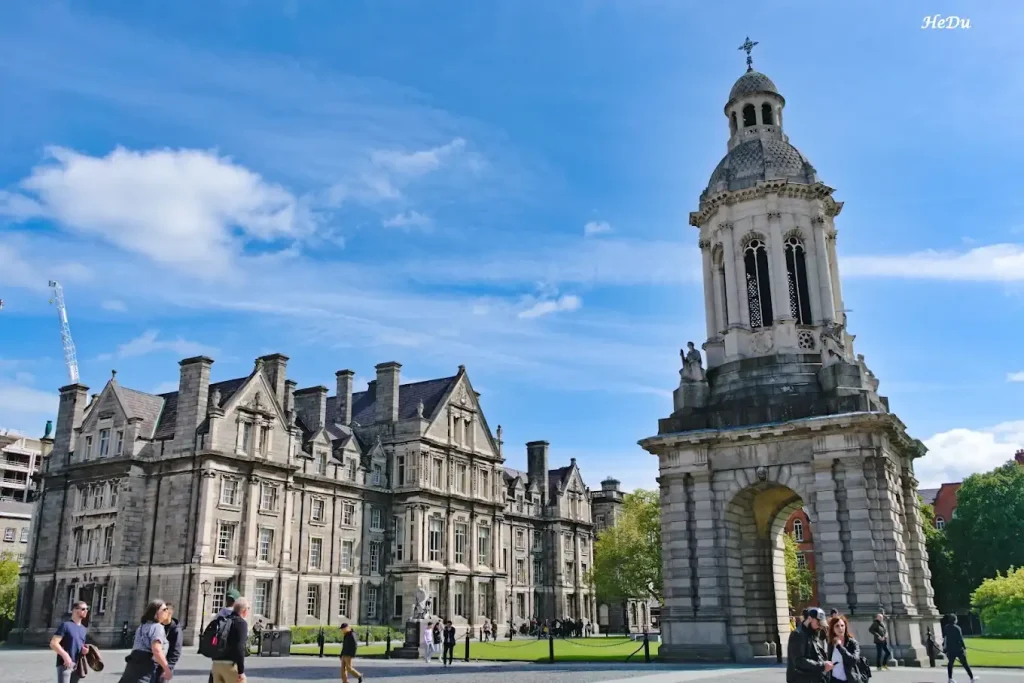
Trinity College is Ireland’s oldest university, and its location in central Dublin places students inside one of Europe’s most active tech and innovation ecosystems. Over 200 English-taught degrees cover Computer Science, Biomedical Engineering, Law, Commerce, Global Health, and the Arts, supported by research clusters in neuroscience, AI, and business incubation that connect academic study to live industry.
With 34% international enrollment and 120 student societies, the campus balances strong academic support with a genuinely engaged student life. It suits students who want a historically grounded university with modern research infrastructure, in a city that offers real professional proximity to the European tech sector.
- Location: Dublin, Ireland
- Tuition: ~€3,000 – €5,681 / year (EU/EEA) | ~€21,000 – €29,000 / year (Non-EU / International)
- QS ranking 2026: #75
- International students: ~7,200 students (33% international)
- Students from: 120+ countries
- English-taught programs: 100%
- Best for: Blending centuries of academic heritage with modern innovation in one of Europe’s leading tech hubs
10. Semmelweis University (Hungary)
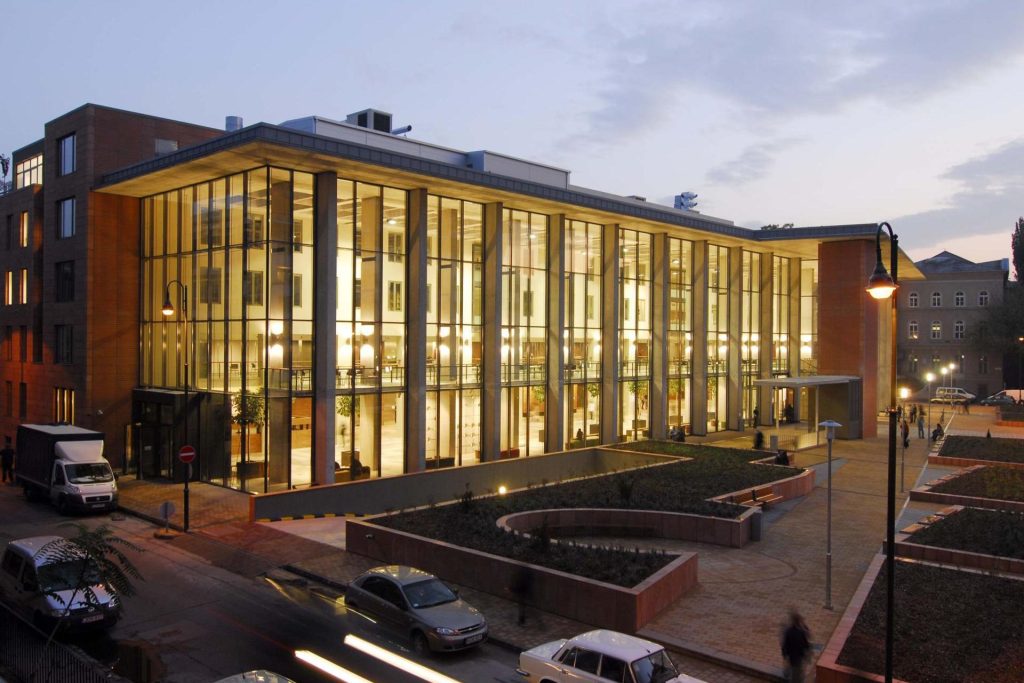
Semmelweis is Hungary’s leading health sciences institution, and its English-taught medical programs have made it a consistent destination for international students pursuing medicine at a competitive cost. The six-year MD, alongside programs in Dentistry, Pharmacy, Physiotherapy, and Public Health, is grounded in hands-on clinical hospital training from early in the degree rather than reserved for later years.
With students from 110+ countries making up a significant share of the 13,000-strong student body, the community is international by design. It suits students who are committed to medicine or allied health and want rigorous clinical training without the tuition costs associated with Western European medical schools.
- Location: Budapest, Hungary
- Tuition: ~€7,200 – €7,900 / year
- QS ranking 2026: #251-300 (Subject)
- International students: ~4,500+ students (33% international)
- Students from: 110+ countries
- English-taught programs: 100% for core medical programs (Medicine, Dentistry, Pharmacy)
- Best for: World-class, hands-on clinical medical training at a highly competitive cost compared to Western Europe
11. John Cabot University (Italy)

John Cabot University (JCU) is an American-accredited liberal arts university in the heart of Rome, offering all programs in English. The US accreditation means the degree structure, grading system, and academic culture will feel familiar to students coming from or heading toward North American institutions, while Rome itself becomes an extension of the classroom through internship opportunities built into the local professional network.
With around 1,830 students from 75 countries and an average class size of 15, the experience is deliberately intimate. It suits students who want a personalized, American-accredited education in Europe, with the cultural immersion of living and studying in Rome.
- Localisation : Rome, Italy
- Tuition: ~€26,500 / year
- QS ranking 2026: Unranked
- International students: ~1,830 total students
- Students from: 75 countries
- English-taught programs: 100% (US-accredited institution)
- Best for: A close-knit, personalized American-style liberal arts education in the historical center of Rome
12. Franklin University (Switzerland)

Franklin University Switzerland offers something genuinely unusual in European higher education: a US-chartered liberal arts degree where international travel is built into the curriculum and all programs are taught in English. The Academic Travel program takes students abroad for 10-14 days each term to engage with course topics in real-world contexts, across destinations that shift by discipline and semester.
With around 410 students from 59 countries, the community is small and highly international by design. It suits students who want a cross-border, experiential education and are drawn to fields like International Relations, Environmental Studies, or Business within a close-knit, globally mobile environment.
- Location: Sorengo, Switzerland
- Tuition: ~€44,500 / year
- QS ranking 2026: Unranked
- International students: ~410 total students
- Students from: 59 countries
- English-taught programs: 100% (US-chartered institution)
- Best for: Cross-border, hands-on global learning via its signature Academic Travel program
13. Durham University (England)
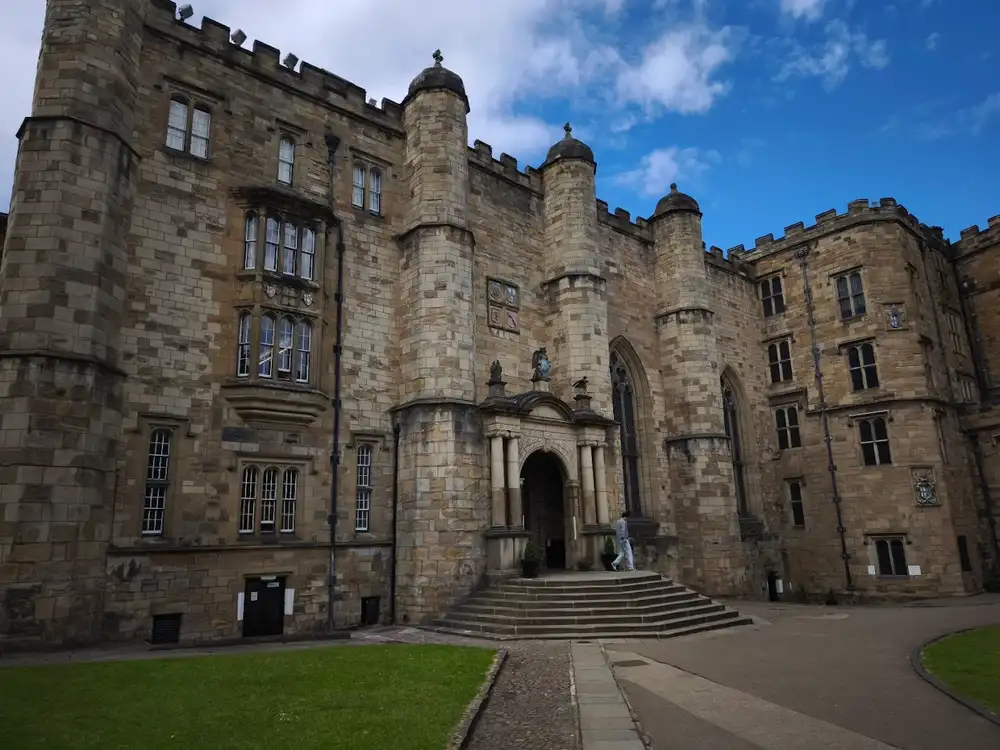
Durham’s collegiate system is one of the most distinctive features of the undergraduate experience in the UK, and it shapes student life in ways that go beyond accommodation. Students live, eat, and build communities within their college while accessing university-wide academic programs across the liberal arts, sciences, and theology. That structure produces a campus culture strong in tradition, personal support, and student leadership.
With 22,200 students from 156+ countries and a global reputation particularly strong in Arts and Humanities, Durham attracts students who want the academic weight of a Russell Group-adjacent institution alongside a genuinely close-knit campus experience. It suits students who value community as much as academic credentials.
- Location: Durham, England
- Tuition: ~€11,700 / year (UK Home) | ~€36,600 – €49,200 / year (International)
- QS ranking 2026: #94
- International students: ~6,600+ students (30% international)
- Students from: 156+ countries
- English-taught programs: 100%
- Best for: A historic collegiate system offering personal support, strong traditions, and excellence in Arts & Humanities
14. Queen Mary University of London (England)
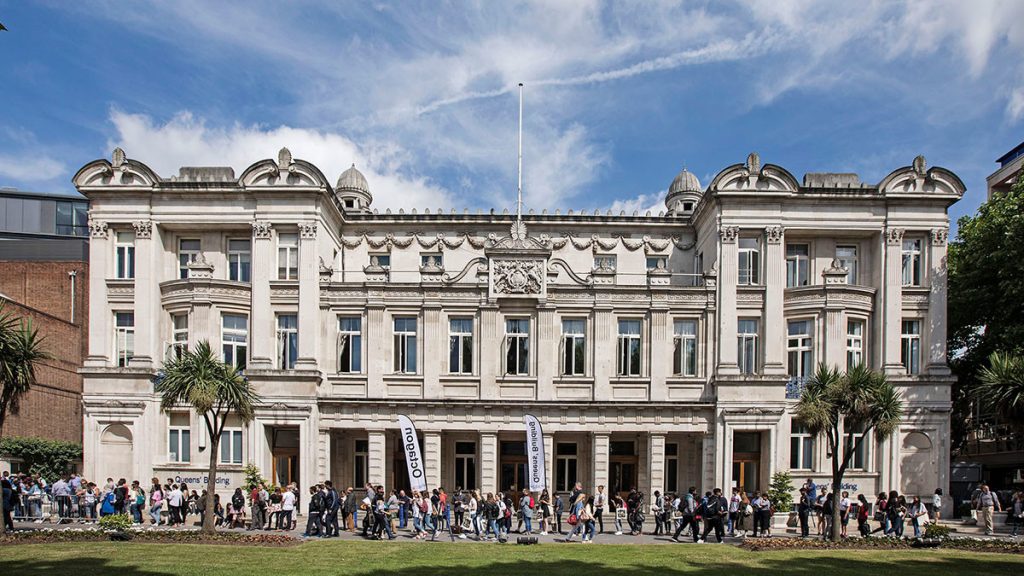
Queen Mary sits within the Russell Group and has built particular strength in Medicine, Law, Dentistry, and Engineering, disciplines where its partnerships with London hospitals, health trusts, and legal clinics give students direct access to professional practice while still in their degree. That applied orientation runs through programs in Business, Psychology, and Life Sciences as well.
With 32,000 students from 170+ nationalities, QMUL is one of the most diverse university environments in the UK. It suits students who want a research-strong London university with genuine subject-level excellence and direct professional exposure, particularly in health, law, or engineering.
- Location: London, England
- Tuition: ~€11,700 / year (UK Home) | ~€36,600 – €42,600 / year (International)
- QS ranking 2026: #110
- International students: ~13,000+ students (41% international)
- Students from: 170+ nationalities
- English-taught programs: 100%
- Best for: Medicine, Law, Dentistry, and Engineering with strong community partnerships and direct access to professional practice
15. SOAS University of London (England)

SOAS University of London is a world-leading institution for African, Asian, and Middle Eastern studies, offering all programs in English. Located in the heart of London, SOAS attracts students from 130+ nationalities, creating one of the UK’s most multicultural academic communities. The university is known for its focus on global policy, rare language expertise, and in-depth regional knowledge.
Law programs at SOAS rank among the more distinctive law schools in the UK, with a focus on Middle East Legal Studies and international legal systems. English-taught degrees also include International Relations, Development Studies, African and Asian Languages, Anthropology, and Economics & Finance.
It suits students with a specific regional or global policy interest who want to study in an institution where that focus is the entire point, not a single department within a broader university.
For younger students aiming to begin their education journey earlier, the UK is also home to some of the most prestigious boarding schools in UK, many of which prepare graduates for success at universities like SOAS.
- Location: London, England
- Tuition: ~€11,700 / year (UK Home) | ~€29,400 – €35,400 / year (International)
- QS ranking 2026: #511
- International students: ~2,200 students (43% international)
- Students from: 130+ nationalities
- English-taught programs: 100%
- Best for: Global policy, rare language expertise, and in-depth regional knowledge of Africa, Asia, and the Middle East
How to Apply to English-Speaking Universities in Europe
Applying to English-speaking universities in Europe is rarely a simple, one-size-fits-all process. Each country runs its own admissions system, sets its own document requirements, and operates on its own timeline. Working with experienced conseillers en admission à l'université can make all the difference, helping you stay organized, avoid mistakes, and find the best-fit program for your goals.
1. Different Admissions Systems
There is no single European application portal. The UK uses UCAS, a centralized platform with most undergraduate deadlines falling in January. Most continental European universities operate direct application systems through their own institutional portals, with requirements and deadlines varying significantly by country and program.
2. Language & Exam Requirements
Even when a program is fully English-taught, proof of English proficiency is almost always required for non-native speakers. Most universities accept IELTS and TOEFL, with typical undergraduate thresholds around IELTS 6.5 and TOEFL 90, and higher requirements for competitive postgraduate programs. Some disciplines also require subject-specific assessments or portfolio submissions.
3. Choosing the Right Program
Rankings don’t always tell the full story. The right program is one that aligns with your strengths, learning style, and career aspirations. By looking beyond the obvious names, you can uncover hidden opportunities, many of which can be found in study in Europe universities lists curated by expert advisors.
4. Managing Timelines
Deadlines vary by country, institution, and program. And document preparation takes longer than most applicants expect. Building a clear timeline from first research to final submission, accounting for transcripts, references, personal statements, and language test scores, is the baseline for a well-managed application process.
Conclusion
English-speaking European universities combine world-class academics with the cultural depth and diversity of some of the world’s most vibrant cities.
For international students, they offer the chance to earn a globally respected degree, immerse in new perspectives, and prepare for careers that span continents, all without the barrier of learning a new language first.
Choosing the right university isn’t just about rankings. It’s about finding the place where you can grow academically, expand your worldview, and develop the skills today’s employers value most. With the right guidance, that choice becomes clearer, simpler, and more rewarding.
If you’re ready to explore your options, our international university consultants can help you identify your best-fitting English-speaking university in Europe and guide you through every step of the admissions journey.
FAQ
1. Can I study in Europe without knowing a second language?
Yes. Many English-speaking European universities offer full degree programs in English, so you can complete your studies without needing to become fluent in another language. While day-to-day life might still involve some local language, universities often provide language classes and integration support to help you adapt.
2. Are degrees from English-speaking European universities recognized worldwide?
Absolutely. Degrees from top European universities are recognized globally and hold strong reputations with employers and graduate schools. Many institutions have international accreditations, making them competitive for career and academic opportunities worldwide.
3. Is it hard to get accepted to English-speaking programs in Europe?
Admission competitiveness varies by country and university. Prestigious institutions can be selective, requiring strong academics, test scores, or portfolios. Working with experienced advisors like (McMillan Education International’s team) helps you navigate requirements and identify the programs where you have the best fit and chances of admission.
4. Can I work while studying at a university in Europe?
In many countries, yes. Nations such as Germany, the Netherlands, and Ireland allow international students to work part-time during their studies. Rules vary, so it’s important to check each country’s specific visa regulations before you apply.
5. Which countries in Europe are most welcoming to international students?
Countries like the Netherlands, Ireland, Germany, and Switzerland consistently rank high for international student satisfaction due to their quality of education, English-taught programs, and post-graduation opportunities. Switzerland, for example, combines excellent higher education with access to internats internationaux, making it a popular choice for families planning long-term academic pathways.